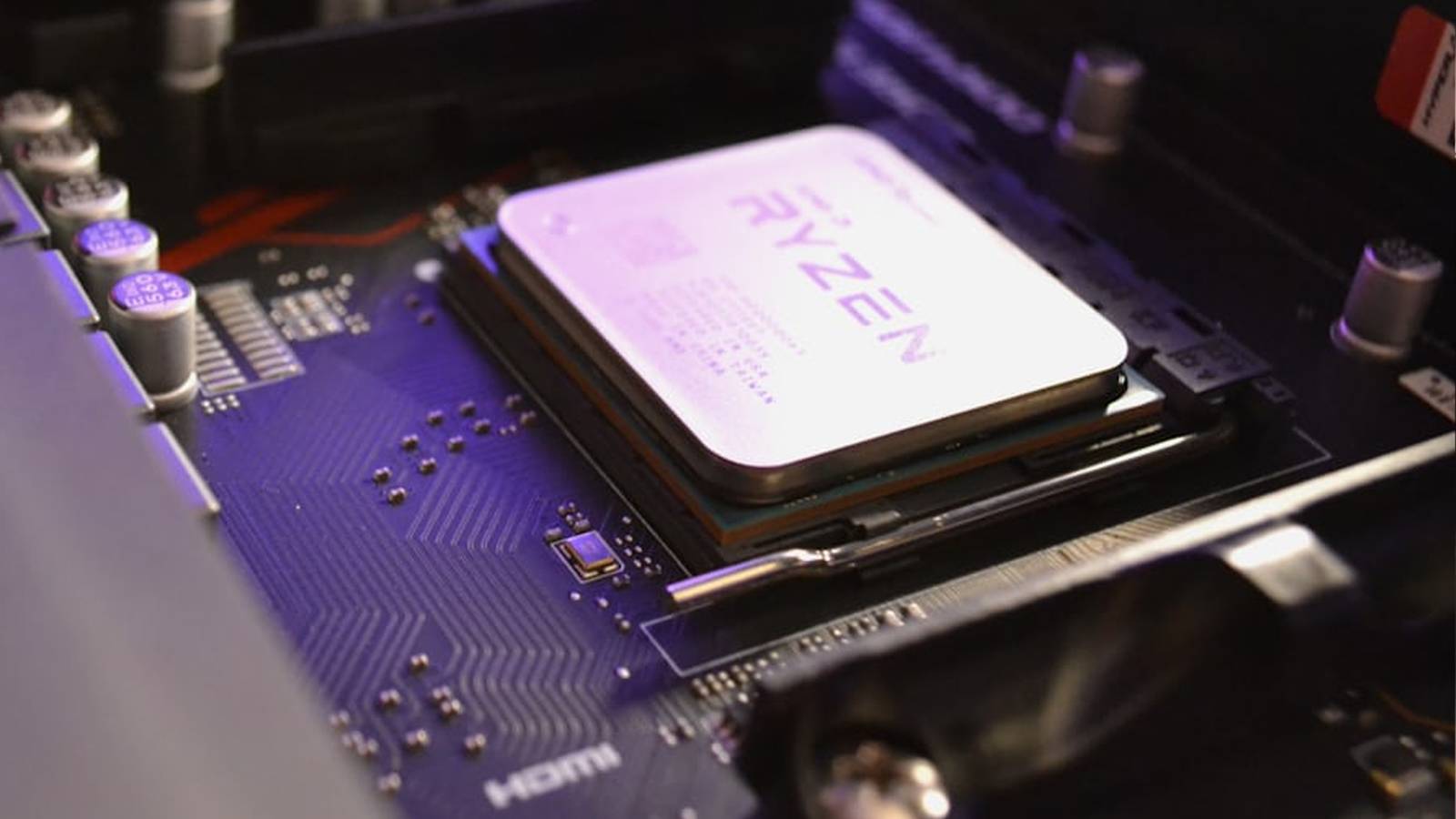
The Ryzen 5600G was (when it was released back in 2021) a fantastic little CPU that happened to have one of the most powerful integrated graphics solutions on the market. Both the 5600G and 5700G can be credited with somewhat easing the great GPU crisis of that time for a lot of folks, serving as stopgaps until you could get your hands on a decent GPU.
Heading back into the present year of 2026, things have changed. AMD’s integrated graphics have grown even more powerful, with the latest iteration (the Ryzen Z2 Extreme) using an RDNA 3.5-based iGPU that is eons ahead of the Vega 7 graphics in the 5600G.
Curious, I decided to pit the two APUs in a rather unfair comparison, and the results were surprisingly “good enough” for a 5-year-old iGPU.
A few preparations before we begin
Games, BIOS settings, and some overclocking

The Ryzen 5 5660G was never a particularly powerful CPU when it first launched, and was a significant downgrade over the often similarly priced Ryzen 5600X, which offered double the L3 cache and PCIe 4 instead of 3.
Still, the Ryzen 5600G was a decent enough processor for most, and you’d be hard-pressed to tell the difference between it and a 5600X for most games.
That being said, a stock 5600G is nowhere near good enough, and there were a few BIOS settings I needed to tweak in order to get the integrated Vega 7 graphics up and running at its true potential:
UMA Frame Buffer Size was set to 4GB for a more realistic approach. I could have selected 8GB, but it barely makes a difference to this weak GPU.
- The iGPU was given a 300 MHz overclock, bringing it to 2200 MHz.
- The GFX core voltage was set to 1.20 V.
- XMP was enabled, having the dual-channel RAM sticks run at 3200 MHz.
XMP is something you will always want to have enabled. Ryzen CPUs and their iGPUs work best with faster RAM, and it does make a significant difference. Dual-channel RAM is also a must.
To be perfectly honest, it’s not like overclocking the APU in a 5600G will yield any massive performance improvements — but it should help smooth out the frame rate, making for a more playable experience.
Finally, I fired up Steam and set three games, Batman: Arkham Knight, DOOM (2016) and Cyberpunk 2077, as the basis for my benchmarks.
Benchmarking the 5600G’s Vega 7 graphics
You’ll mostly be in the 30 FPS territory
The Ryzen 5 5600G has a Vega 7 iGPU, composed of 7 CUs running at 1900 MHz stock. It shares memory from system RAM and is, by all accounts, not a powerful GPU. That being said, I was surprised by how the 5600G put up quite a fight across the three games, performing much better than I expected.
- Batman: Arkham Knight was more or less playable, averaging around 34FPS with highs into the 40s. It did have a 1% low of 26FPS, which was a bit concerning. Everything ran at Low settings with a static resolution of 1600×900 since the game doesn’t support FSR.
- Cyberpunk 2077 was the hardest to run. It managed a measly average of 26 frames per second, according to the in-game benchmark. In practice, though, it stays around 25–30FPS most of the time, though I didn’t test Phantom Liberty, which should perform much worse. Low settings, with FSR 2.0 upscaling set to Performance, were used with a 1080p target resolution.
- DOOM (2016) ran the best and scaled incredibly well. At 65% render resolution and with medium settings, I averaged around 70FPS. The game was incredibly fluid at 1080p, and I could see myself playing it this way even if the visuals were middling.
The Vega 7 iGPU is quite old at this point and nowhere near the more modern RDNA 2- and RDNA 3.5-based integrated graphics. This older architecture is noticeably less performant and has the side effect of introducing some random stutter (likely to be do with the limited, slow VRAM), which complicated things.
Benchmarking the Ryzen Z1 Extreme’s APU
Generational improvements in gaming performance

Not exactly an apples-to-oranges comparison, but the Ryzen Z1 Extreme seemed like the natural choice for a comparison. After all, it does represent a more or less modern version of AMD’s current iGPU stack, and also happened to be the one I had at the time (in the form of a Legion Go).
Firing up the same benchmarks, the improvements were nothing short of generational:
- Batman: Arkham Knight ran well above 70 FPS during the benchmark, at a resolution of 1920×1200 with everything set to High.
- Cyberpunk 2077 was a bit less transformative, hitting between 40 to 60FPS with medium settings and some FSR. It might be a better idea to drop the resolution to 1920×1200 and enable FSR with the Balanced preset for better results.
- DOOM (2016) easily went above 60 FPS in its 1% lows, often managing to reach well into the 100FPS territory in certain sections of the game. This should come as no surprise — it’s a very well-optimized game capable of running on even the most potato PC hardware.
Games went from being barely playable to an actually good experience on the Z1E, and there was more to it than just the boost in FPS.
The Z1 Extreme does a lot more than just raw performance
Efficiency and newer RDNA 3 graphics help out a lot

The iGPU of the Z1 Extreme is generations ahead of the Vega 7 in the 5600G, and it really proved itself in the benchmarks. For starters, it’s built on the newer RDNA 3 graphics and has way more CUs to deliver extra performance.
It’s also doubly impressive when you consider that the 5600G is a desktop CPU, and the Z1 Extreme (a handheld APU) still manages to run circles around it, even when taking into account CPU performance.
It’s also much more power-efficient, meaning you can run it on battery power, which makes it ideal for a handheld.
Of course, there have been newer iGPUs, with the Ryzen AI MAX series being the most notable of the bunch. These offer performance similar to that of a mobile RTX 4060 while consuming a fraction of the power, making them portable beasts.
The point being, we’ve seen some rather impressive boosts to iGPU tech in the past few years alone, and it’s only going to get better. It’s quite an exciting time to be an iGPU enthusiast.
If you keep reasonable expectations, the 5600G might still serve you well
While there is no doubt that the Ryzen 5600G’s iGPU is mediocre at best and perhaps even quite outdated by 2026 standards, it still performs somewhat. If all you’re looking to do is play a few esports titles along with some “retro” and indie games, the Vega 7 graphics should do just fine.
With component prices skyrocketing lately, it might be time to revisit the older AM4 platform and ultimately revert to the classic iGPU + dGPU setup.