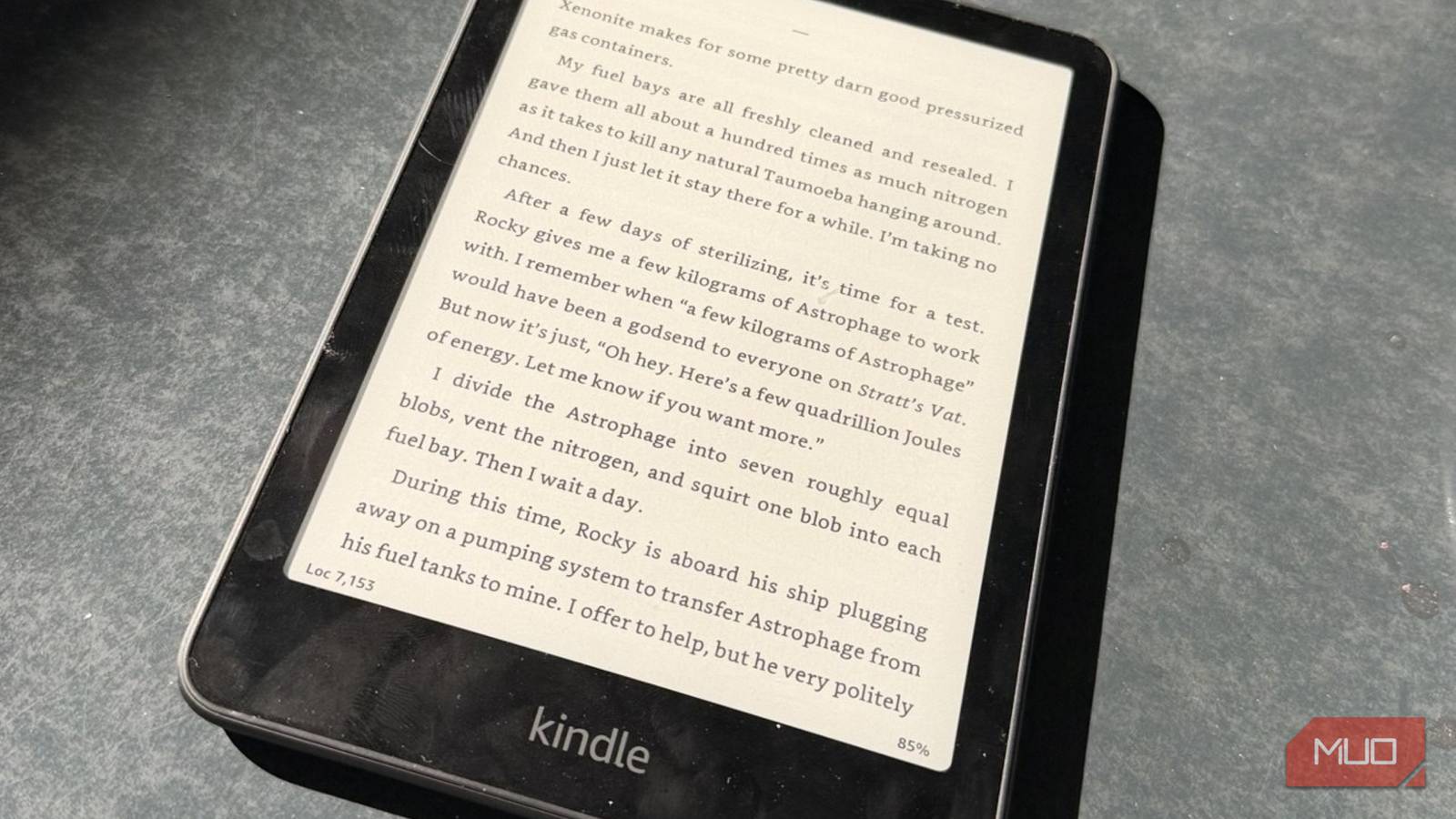
Justin Gawronski was 17, and the copy of 1984 on his Kindle was a summer assignment. He had been reading it the way teachers want students to read, way before studying with AI had become the standard: highlighting passages and typing notes against them.
On the morning of July 17, 2009, he turned on the device and the book was not there. Amazon had refunded the ninety-nine cents he paid for it and moved on. Close to two thousand other Kindle owners lost Orwell the same day, across 1984 and Animal Farm.
The incident survives mostly as a piece of trivia about irony, which undersells it. What happened afterward matters more: Amazon apologized, got sued, settled, and signed a binding commitment never to do it again. It has kept that commitment for seventeen years. In the same period the position of anyone buying a digital book, film, album or game has gotten steadily worse, and almost none of that required deleting anything.
The book was never Amazon’s to sell
A publisher’s bad bet
The books arrived in the Kindle Store through a small operation called MobileReference, which had uploaded them on the reasonable-sounding assumption that Orwell was public domain. In Australia and Canada, where protection then ran for the author’s life plus fifty years, he was; Orwell died in January 1950. In the United States, where the terms are considerably longer, he was not, and once the rights holder noticed the listings, Amazon had an unlicensed edition sitting in its catalog and on the devices of everyone who had already bought it.
A bookshop discovering the same problem can only do one thing, which is stop selling the book. Amazon could do more, because of a feature nobody had thought to be suspicious of. Every Kindle shipped with free cellular service called Whispernet, the thing that made the original device feel like a trick — you could buy a novel on a park bench and start reading it a minute later. The connection had never been one-directional. Amazon sent a command down it, and the copies came off the devices.
This sat awkwardly against what Amazon had told its customers. The Kindle terms of service in force at the time granted buyers “the non-exclusive right to keep a permanent copy” of the content they purchased.
Gawronski’s complaint was narrower than the general outrage, and more interesting. His notes had been stored in a file separate from the book itself, so the deletion left them intact and useless — a set of markers keyed to locations in a text that was no longer on the device. The refund covered the novel. It did not cover the six weeks of annotation, and there was no mechanism by which it could have.
On July 30 he sued in federal court in Washington alongside Antoine Bruguier, a Silicon Valley engineer who had lost the same book. The claims ran through the Computer Fraud and Abuse Act and conversion, the old tort of taking someone’s property.
Bezos says sorry
The apology, and the deal

A week before the lawsuit, on July 23, Jeff Bezos posted to the Kindle customer forum under his own name. He signed off “With deep apology, Jeff.”
This is an apology for the way we previously handled illegally sold copies of 1984 and other novels on Kindle. Our “solution” to the problem was stupid, thoughtless, and painfully out of line with our principles. It is wholly self-inflicted, and we deserve the criticism we’ve received. We will use the scar tissue from this painful mistake to help make better decisions going forward, ones that match our mission.
Bezos had done something comparable once, nine years earlier. In September 2000, Amazon was caught charging different customers different prices for the same DVDs. The company refunded 6,896 customers and put out a statement in which Bezos called the test a mistake he regretted.
Regardless, the case settled that September for $150,000, with the plaintiffs’ firm directing its share to a literacy charity. Affected customers were offered the book back or thirty dollars. Amazon also accepted a restriction on its own conduct: it would not remotely delete or modify purchased Kindle books unless the customer consented, the customer sought a refund, a court ordered it, or the removal was necessary to deal with malware.
That is a promise about deletion, and it has held. It says nothing about retiring the download option, or pushing a revised edition of a book you already own, or an account that stops working. Those turned out to be the paths that mattered.
Seventeen years of the same lesson
No deletions required

Elsewhere the pattern repeated without anyone breaching a settlement. Puffin’s revised editions of Roald Dahl reached Kindles in early 2023 and replaced the originals on devices that already held them, which required no deletion at all, only a routine content update. Ubisoft shut down the servers for The Crew in March 2024 and then revoked players’ licenses outright, pulling the game from libraries, including those of people who had bought it on a disc. On February 26, 2025, Amazon retired “Download & Transfer via USB,” the option that had allowed readers to keep a local copy of a purchased book on a hard drive.
The 2009 case had the advantage of being legible. There was a file, it was on a device, and then it was not, and everyone could see the shape of what had happened. That visibility is what produced the outrage, the lawsuit, the apology and the settlement, all inside ten weeks.
The arrangements that followed are harder to photograph. A car whose heated seats are a subscription, a home assistant that loses a feature in an update, a creative tool that works only for as long as a server somewhere answers (remember Adobe CS?) — none of these involve a file anyone can point to. Amazon’s promise still stands, and still covers exactly what it covered in 2009: books, on Kindles, deleted. It was written for the last version of the problem.