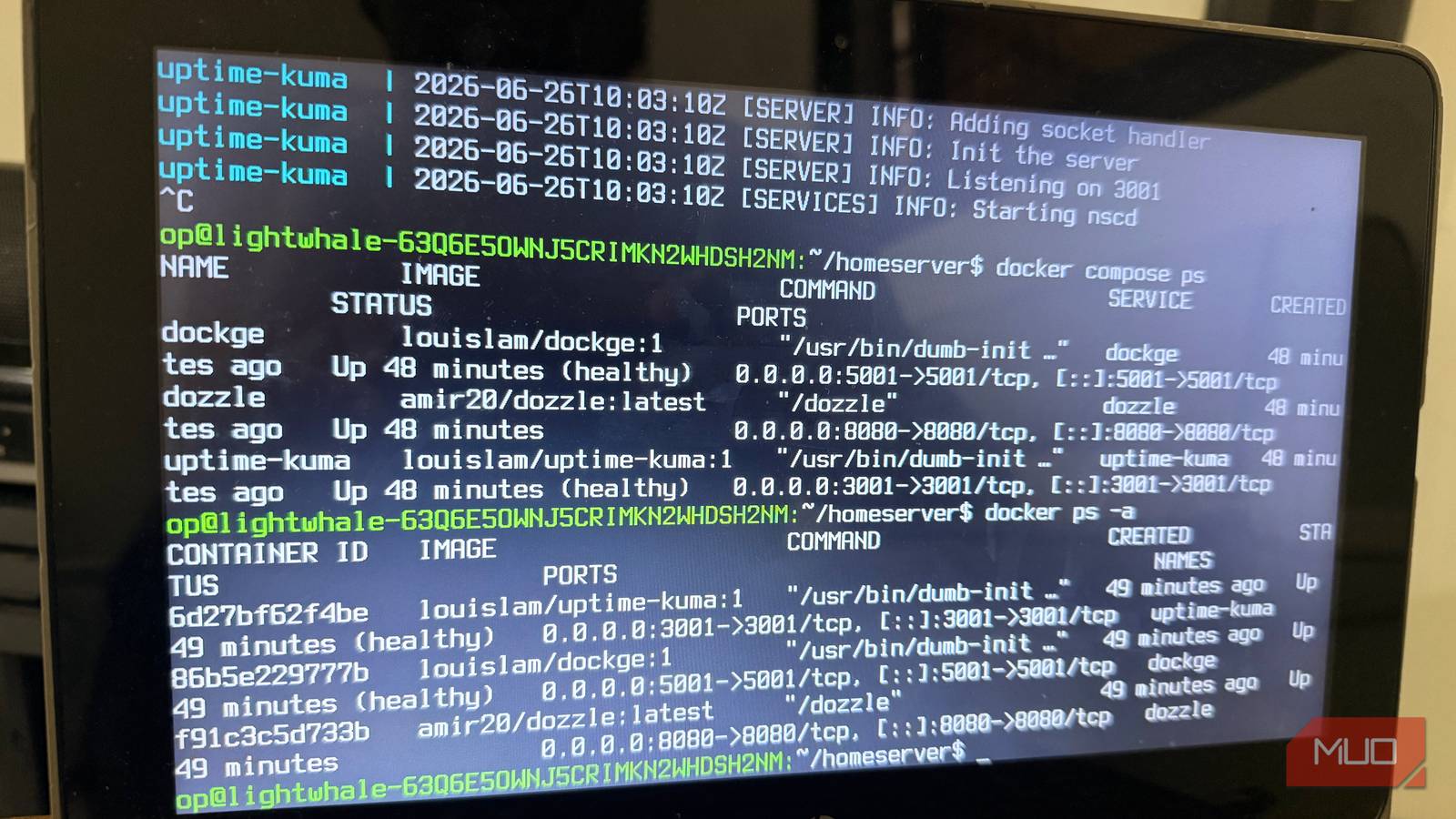
Even when a Docker container runs for a year, the application isn’t necessarily getting more useful. What makes the biggest difference over time is the history it builds. Some services become far more useful than others with time, retaining a body of data and history that can answer questions you may never be able to reconstruct. Reliability is great, but this kind of data becomes accumulated knowledge, and continuous uptime is what lets it build.
Your photo library and your location history hit the same tipping point
Search only becomes useful once browsing stops being possible
If you have just a few hundred photos, it’s easy to scroll through. You can roughly remember when the photos were taken, who the people are, and it takes just a couple of minutes to find the photo you need. However, once you have tens of thousands, everything changes. If you use Immich, that’s when its facial grouping, location tags, and contextual search become far more useful for finding anything. This doesn’t mean the software itself has improved. However, your collection is large enough to make manual browsing impractical. So the container itself isn’t getting any smarter, but the data it holds is now more valuable.
Immich’s smart search relies on pre-trained models rather than training a new model from scratch on your personal library. It’s also worth remembering that Immich being your photo backup doesn’t mean Immich itself is a complete backup solution. You still need protection for the media files and database.
It’s a similar curve for Dawarich. You only have a single GPS coordinate. However, if you have a full year of continuous points, that data maps where you actually spend time, not merely the places you claim to visit. This is similar to importing a year of location history from Google Maps Timeline or collecting it through OwnTracks. This history exists only because the data was collected or imported and kept. Services don’t automatically invent locations they have never seen. Self-hosting gives you a place where, over time, you can gather this data on hardware you control.
Everything you save today is worthless until you can’t find it again
Watching a page long enough turns it into your own private record of the internet

If you have ten bookmarks, you can manage them by memory or, worst case, using folders. This becomes impossible when you have a few thousand saved articles, documentation pages, and reference PDFs. At this volume, Karakeep’s full-text search becomes one of your most practical solutions for recovering something you know you saved six months ago. You only have a pointer when you save a URL, because the actual page behind it can change or disappear. Karakeep can help you archive the actual content behind that URL if you configure it to.
It’s great that Karakeep keeps what you deliberately chose to save. However, a tool like ChangeDetection.io keeps what you are still watching, which may include a page you didn’t remember to bookmark. Most people set up ChangeDetection.io for alerts, but a more interesting use case is the history it builds from the changes it captures. If a pricing page gets revised, or a line gets removed from a product specification, these changes can become a useful record of what the page actually said at the time. The data it builds depends on your watch configuration and successful fetches. It’s not archiving the internet, but its history of monitored changes over time is useful data that increases its value as a self-hosted tool over time.
A healthy server and a failing one look identical for the first few weeks
Patterns only show up once there’s enough history to compare against
On the first day of setting up services, the numbers you see may look fine. On my machine, 8% CPU and a few gigabytes of RAM wouldn’t trigger any red alerts. But once the graphs start to stretch across several weeks and months, patterns begin to emerge. You can start spotting memory usage that creeps up week to week, containers that behave poorly under load, or recurring outages.
You don’t see any of these by taking a single glance at the dashboard. As the history behind each metric grows longer, Beszel becomes more informative. The trade-off is that keeping high-resolution data forever eventually increases storage and retention requirements.
None of this survives without one unglamorous decision
The container is the application environment; the persistent volume is where much of the history that matters actually lives. Once the volume stays intact, even if you delete the container, you can recreate the container around the same data. However, you can wipe away months or years of history by pointing the wrong maintenance command at the wrong volume.
These services become valuable when you leave them running, but that doesn’t mean you can install them and forget about them. The price you pay for keeping history is updates, backups, and deliberate retention choices.