Removable smartphone batteries were once the norm. Every single smartphone had one, until a period between 2012 and 2016 when it was suddenly decided that no one wanted removable batteries anymore.
Of course, folks like you and I didn’t specifically decide that we didn’t want them. But our desires and demands for phones that can repel water and dust with enormous batteries pushed non-removable cells into the forefront of design.
But times are changing. A handful of niche smartphones already offer a removable battery, and the EU’s 2027 removable battery ruling should force the rest of the industry to play nicely.
Smartphones with removable batteries are coming back at long last
It’s apparently what consumers want

The loss of removable smartphone batteries has probably directly impacted you at some point in the past decade, positively or negatively. Your phone is way more waterproof than in 2016, but if your battery dies, the smartphone probably goes with it.
Still, a removable battery in 2026 probably isn’t at the top of your birthday present list, given how accustomed we now are to our fully sealed devices.
But there are a few reasons why the return of removable smartphone batteries is good.
The first, and biggest, is that lithium batteries degrade over time. Once they’re dead, they’re dead. They can even expand, explode, and cause all kinds of issues. Removable batteries mean you can easily swap them out for a new one and keep using the same device.
Second, working in tandem with the first, is that removable batteries will reduce the amount of e-waste created by smartphones (and the other devices beginning to make the switch). Given the millions of tonnes of e-waste created each year, a reduction can’t be a bad thing.
Finally, removable batteries, when properly implemented, should drastically reduce the cost of battery replacements. Even though most smartphones are fully sealed units that often use proprietary screws, ultra-strength industrial glues, and other techniques to keep you out, smartphone battery replacements still exist.
However, due to these measures, a smartphone battery replacement can easily run into the hundreds of dollars once you’ve paid for parts and labor, depending on the device. In fairness to Apple, its out-of-warranty battery replacements start at $99 for the latest iPhone generations; who knows what that’ll become with the iPhone Duo, given how notoriously difficult swapping batteries on foldables is.
Foldables aside, removable batteries should make everything as simple as buying a new cell, popping the back off your phone, and swapping it over. That prospect also brings another clean advantage, one I used to take advantage of back in the day: you can carry a separate, charged cell to swap in.
Now, I’ll concede that smartphone battery capacities are better than ever, but who hasn’t had that moment where there is no outlet, your portable charger is dead (also spot the issue there), and you need to make a call.
So, which smartphone manufacturers are bringing back removable batteries?
Not the names you’d want to see
Removable smartphone batteries never fully went away, mind.
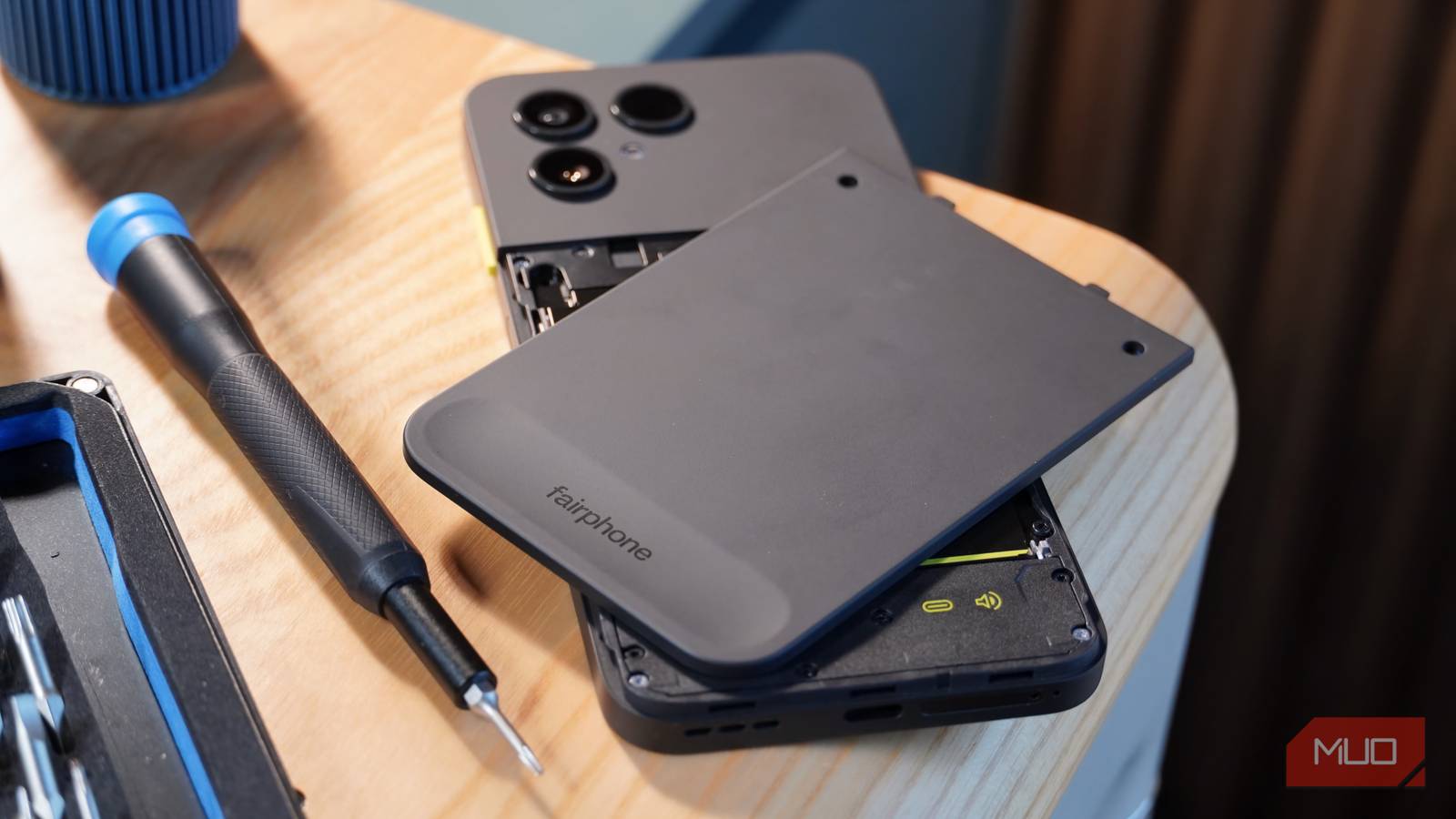
E-waste champions Fairphone have committed to a removable battery on multiple generations of its smartphones. The latest, the Fairphone 6, has a fully removable and swappable 4,050mAh battery that you can change in under a minute, while the rest of the smartphone is effectively completely replaceable and repairable. Its Fairbuds follow a similar principle, too.
The only issue with the Fairphone is the IP55 water resistance rating, which is far below the IP68 rating you’ll find on most modern devices.
But that’s actually less of an issue than you think.
Samsung also builds a little-known smartphone with a removable battery: the Galaxy XCover7 Pro. This smartphone is designed for rugged use and comes with a swappable 4,350mAh battery, IP68 water resistance, and military-grade durability. The IP68 shows that it’s absolutely possible to have a high water and dust resistance rating on a smartphone with a replaceable battery. It’s just that most companies don’t want to engage with removables full-stop, water resistance rating or not.
You won’t find any other major smartphone brand on the list, though, outside of that one Samsung device. Apple, Google, Motorola, Honor, Xiaomi, Nothing… none of them make a device with a removable battery. You’re considering names such as the BLU G33 or the Kyocera DuraForce PRO 3… yeah, me neither.
So, what’s bringing about all of this sudden change in the world of smartphones with removable batteries? It’s definitely not the smartphone companies, that’s for sure.
The EU pushed strongly for removable batteries
Then low-key backdoored its own decision

In 2023, the EU enacted Regulation 2023/1542, designed to push devices with portable batteries to move to a fully removable model by February 2027. Not only that, but the batteries should be removable and replaceable by the end user without the use of proprietary tools, heat guns, and similar additional tools.
The move applies to smartphones, but also earbuds, laptops, notebooks, handheld gaming consoles, power banks, household appliances, and more. It’s vast and has the potential to massively reduce e-waste, except for three key issues.
Exemptions for potential battery damage
Despite the EU pushing for this directive, it’s already undercut its own stance by offering a number of devices an exemption. In July 2026, the European Commission added six exemptions, largely absolving many smartwatches, fitness trackers, earbuds, and other devices “where the battery is so tightly encapsulated in its receptacle that its removal may create a non-negligible risk of damage or piercing of the battery.”
On that stance, it’s a safety issue. But there is another issue with the EU’s battery directive, and that’s that the big smartphone manufacturers also aren’t playing ball.
As reported by The Register, the campaign group Right to Repair Europe found that of the 2,334 smartphones launched since 2025, only 18 percent actually list a website detailing where you can buy spare parts or find repair instructions.
More exemptions?
In addition, the EU left another carveout in the ruling text that’s directly applicable to smartphones. Batteries that can hold at least 80 percent of their battery after 800 cycles hit a durability floor, the baseline for other measurements. Within the regulation, though, the EU also (quite rightly) incentivizes higher ratings.
Batteries capable of hitting 83 percent after 500 cycles or 80 percent after 1,000 with an IP67 water and dust resistance rating can force battery repairs back into professional shops. Not only that, but the manufacturers can also limit who is able to repair the batteries, too. Sounds familiar, right? It’s basically the same system we already have, with some extra bells and whistles thrown around for some EU feel-good times.
Manufacturers know they don’t have to comply
Furthermore, you only have to look at the listings for new smartphones from the top manufacturers. Fewer than six months before the EU’s removable battery ruling is meant to come into play, zero of the major manufacturers have launched a smartphone with a removable battery. iPhone Duo? No. Samsung Z Fold 8? Nope. Any of the Google Pixel 11 series? Again, that’s a big old swing and a miss.
So a rule meant to extend the life of the phones you keep longest ends up mostly governing the phones you were going to replace anyway. The modern smartphones it’s meant to affect are exempt anyway, and consumers are standing still. Now, none of this makes removable batteries a dead end, but it’s abundantly clear that the major manufacturers aren’t interested, and more than that, can’t even be brought to the table.
Removable batteries are well-intentioned, but we just don’t need them anymore
It’s not just loopholes holding back replaceable cells

The giant elephant in the room is modern battery tech itself. Most smartphones now ship with batteries built to withstand at least 1,000 charge-discharge cycles (such as the iPhone 18 Pro), with some Xiaomi, Honor, Poco, and Oppo models pushing north of 1,500 cycles, with maximum capacities up to 5,000mAh and more.
For reference, the legendary Nokia 3310 typically gave around 300-500 cycles, with a maximum capacity of around 1,000mAh. Three times the cycles, five times the capacity.
That’s a huge reason for the pushback against modern smartphones with removable batteries. You can hang onto a smartphone for four or five years at least before it really starts to show decline; my wife was using a Pixel 2 up until earlier in 2026, and remarkably, it could still just about hold a charge for a full day with its 2,700mAh battery.
But would I have really wanted to put a new battery in that smartphone, nearly nine years old, with a Qualcomm Snapdragon 835 chipset and a 12MP camera?
No, not really.