
When I hear a government talk about ditching Microsoft for Linux, I’m usually prepared for the same sequence: a press conference, a few years elapse, and then somehow things get reversed without anyone really covering it. This was the pattern in Munich with LiMux.
Naturally, it’s the exact sequel that I expected when Schleswig-Holstein announced in 2024 that it would move a workforce of roughly 30,000 away from Windows. But this turned out to be different because, years before the Linux rollout began, the state had already started removing Microsoft dependencies from the software and services surrounding the desktop. It’s what getting off a subscription that’s hard to live should look like.
Windows is the last thing to go
The desktop waited its turn
A lot of the Microsoft software and infrastructure surrounding the desktop had already started disappearing before Schleswig-Holstein began rolling out Linux.
The administration embraced LibreOffice as its standard Office suite. Its mail system moved away from Microsoft Exchange and Outlook, as Nextcloud was gradually introduced for file storage and collaboration. Then, as part of the broader move, its directory service also started shifting toward an open-source replacement.
Most people caught wind of this because of the 30,000-PC headline, but the mail migration may even be more consequential. Over six months, Schleswig-Holstein moved over 40,000 mailboxes to Open-Xchange and Thunderbird. This was completed on October 2, 2025, and included over 100 million emails and calendar entries.
Money has been a big deciding factor in all this. Schleswig-Holstein says it has already saved more than €15 million in licensing costs. By contrast, the state budgeted €9 million in one-time investment in 2026 for migration and further development of the open-source solutions.
However, I believe the sequence of events is even more interesting. Even before ditching the operating system, some of the first things to go were the software and services that tied it to the broader Microsoft ecosystem. Now it’s Windows’ turn, and the destination is Linux.
The difficult software is still hiding
The software nobody remembers building
The trickier part is the tools employees use for specific government tasks. These are systems that the Schleswig-Holstein state calls “Fachverfahren.” They are often built around proprietary or older technologies, custom databases and workflows with years of accumulated history and data.
Microsoft Access is an example, now being replaced by A12, the low-code development platform from mgm technology partners, a German software company. The idea behind this switch is quite practical. Replacement applications don’t have to be built from scratch by traditional programmers because trained staff will be able to create web-based applications themselves. This should help replace more than 100 Access-based administrative procedures.
Other parties can inspect or reuse A12 because mgm has released central parts of the platform under the European Public License 1.2 through openCode and GitHub.
About 20% of workplaces in the state administration still depend on Microsoft Office in some areas. These are treated as temporary exceptions because of technical dependencies in specialist procedures, with migration paths still being developed. Tax administration is one of the more complicated cases because its specialist systems are being handled through a separate nationwide Länder process. The deeper the migration goes, the less it looks like a mere operating-system project.
Munich left a warning
Linux wasn’t the whole problem
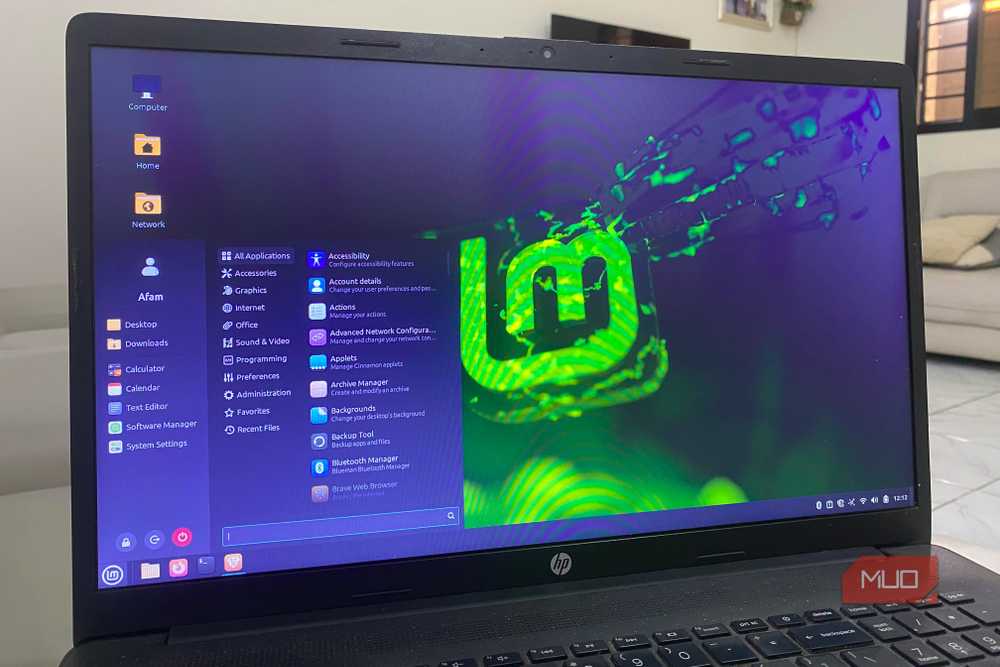
Schleswig-Holstein isn’t the first German government to discover how complex this migration can be. By 2013, Munich’s LiMux project had become a working example of a large public-sector Linux deployment, migrating about 15,000 administrative workstations.
However, later on, there was a change in political direction, and Munich decided in 2017 to move away from LiMux. The easy version of this story was “Linux failed,” but the reality wasn’t as straightforward.
Organizational problems were a far bigger bottleneck than significant technical problems with the desktop software, with the FSFE’s contemporaneous analysis showing there were unclear structures and responsibilities.
There’s another detail: in 2016, Microsoft moved its German headquarters to Munich, and Dieter Reiter, who was the mayor at the time, helped make the move possible. This is striking timing but not evidence for why Munich abandoned LiMux.
However, the lesson is less debatable: even when a migration is technically possible, politics and management may not be conducive to that change.
The approach by Schleswig-Holstein seems different. Email and Office were among the first things to go, while collaboration, identity and specialist apps are being rebuilt around the new system. Telephony isn’t left out. Viakom won the contract for the open-source OSKAR communications platform in August 2026, with the rollout now beginning.
It feels like the desktop is intentionally arriving late for a reason.
The 30,000 PCs are the least interesting part
It’s easier to picture the impact on Microsoft when you think of it based on the 30,000-PC headline. But the real change is harder to see.
What Schleswig-Holstein’s migration shows is that one company doesn’t have to supply all the pieces around the desktop either. The pieces around the desktop are shifting: Office to LibreOffice, Exchange and Outlook to Open-Xchange and Thunderbird, and SharePoint-style collaboration toward Nextcloud. Linux is becoming the final major piece of that transition.
This new environment isn’t free. Software, server operations, employee training, and support all cost money. But Schleswig-Holstein still sees merits in this switch. The money the state is spending, and the effort required to change its infrastructure, are the price it pays for having more control over what happens next. In the future, the cost of changing a supplier that’s expensive, unsuitable or politically inconvenient wouldn’t be as destructive.
Schleswig-Holstein is slowly removing Microsoft’s ability to be indispensable, and that’s the real migration.