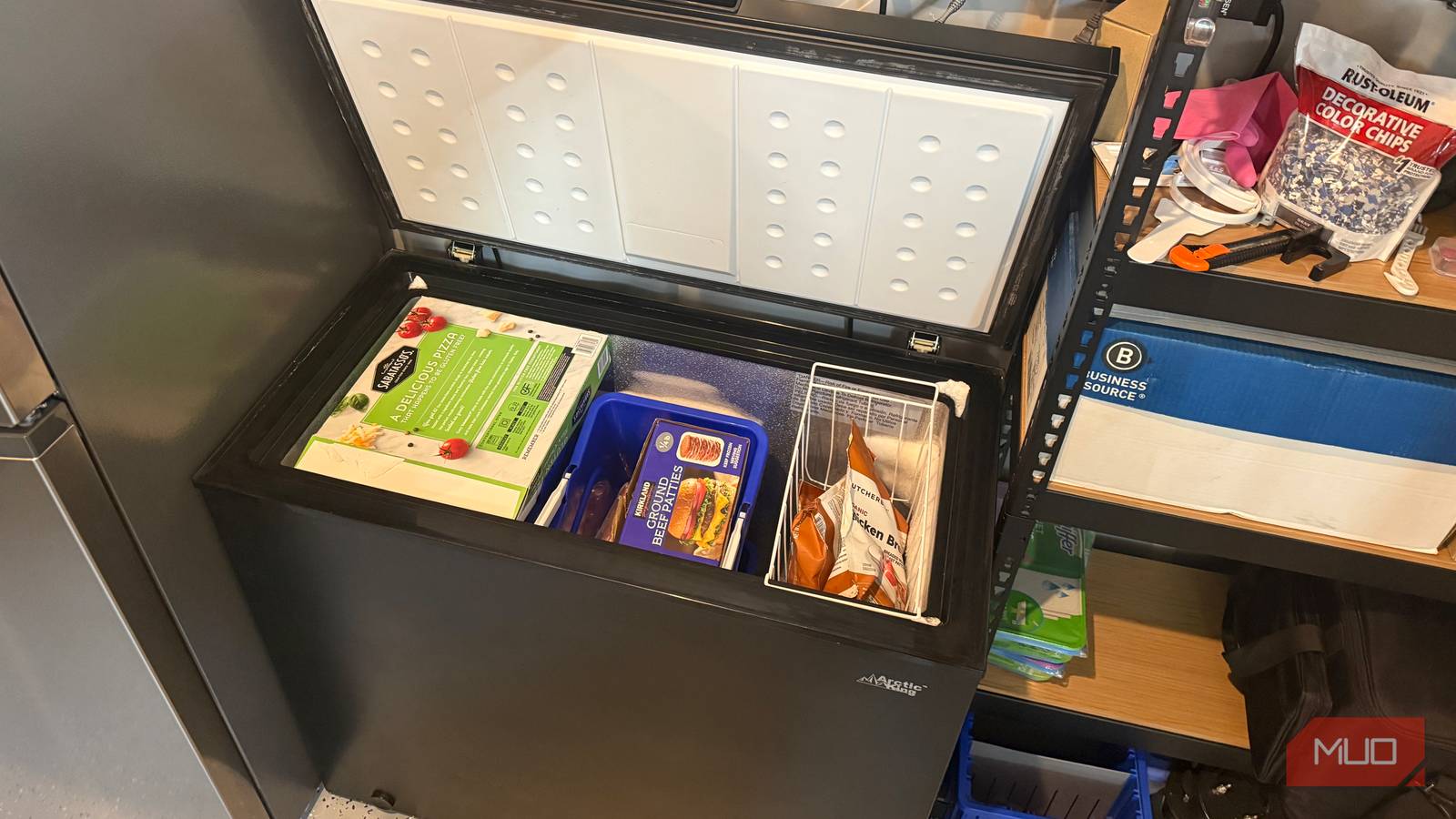
My basement chest freezer is a bet I make without thinking. Meat, garden vegetables, a whole summer of popsicles, all trusting a machine I never check. It runs for years without a complaint, right up until the day it quits. By then the damage is done. I wire sensors into almost everything I own, yet the freezer sat there for months as the one blind spot in the house. That bothered me.
A cheap sensor already woke me at 2am to catch a basement leak, so I know exactly how much a $40 alert can save. So I finally gave the freezer the one feature it should have shipped with: a GoveeLife WiFi Refrigerator Thermometer that alerts me before the food thaws.
The freezer failure you don’t find out about for days
Why basement units fail quietly
Your kitchen fridge lives in your line of sight. You open it a dozen times a day, so a warm shelf or a puddle gets noticed fast. A basement freezer gets the opposite treatment. You pack it and shut the lid, and it vanishes from your mind until you go hunting for a pound of ground beef.
Failures there stay invisible. Maybe the compressor quits. Maybe a stray broom handle knocks the lid ajar, or a thunderstorm trips the GFCI outlet, or the power flickers off while you’re two states away on vacation. Nothing beeps. Nothing flashes.
Over a day or two it creeps up to room temperature. Whatever’s inside thaws, refreezes, and by the time you find it, it’s ruined. A packed upright easily holds a few hundred dollars of food. Losing all of it because an outlet tripped stings, especially when the fix costs less than one grocery run. The problem was never the freezer. The problem was that it had no way to tell me something had gone wrong.
The fix was a probe rated for actual freezer temps
What the GoveeLife thermometer does

My first instinct was to grab one of the Govee indoor sensors I already run around the house. Smart on paper, wrong tool in practice. Those little hygrometers are rated down to about 14°F, and a working freezer sits near 0°F, well past where they stay accurate. So I went looking for something built for the cold and landed on the GoveeLife WiFi Refrigerator Thermometer, a probe-on-a-cable sensor that runs 40–50. Its probe is accurate to about ±0.9°F across a -40°F to 158°F range, so a 0°F freezer sits comfortably inside what it can measure.
Pair the sensor with the Wi-Fi gateway, set a safe temperature range in the Govee Home app, and it pushes an alert to your phone the second the probe crosses that line. Not a beep you’ll only hear if you’re standing in the basement. A push notification that finds you at work, at the store, or three states away on a road trip. One gateway handles up to 10 sensors, so the same hub can watch the fridge, the basement, and the pool.
Why the probe beats the indoor sensor I already owned
Put the cold part in the cold, keep the brains warm

This is where my HVAC background nags at me. A sensor has a rated operating range, and pushing a device past it means trusting numbers the manufacturer never promised. The mini hygrometer isn’t lazy engineering. It’s designed for a bedroom, not a deep freeze. The probe design solves that neatly. Only the metal tip and its thin cable go into the cold, while the sensor body and battery stay outside the freezer where the electronics are comfortable.
That split matters more than it sounds in my climate. We used to keep our deep freezer in the garage before moving it to the basement. An unheated garage in an Indiana January can drop below freezing on its own, so I kept the sensor body up on the wall at garage temperature and ran the probe into the freezer through the lid gasket. The cable is slim enough that it doesn’t break the seal. If you already run a full sensor-based setup, this slots in without a new app or hub to learn. It just adds one more thing the house watches so you don’t have to.
Setting it up so the alert helps instead of annoying
Thresholds, false alarms, and the data trend

A temperature alarm is only useful if you actually trust it. Set the threshold too tight and it screams every time someone digs for popsicles and the surface temp ticks up. The GoveeLife handles this with an anti-false-alarm delay, waiting a few minutes of sustained overrun before it notifies you, so a quick lid-open won’t trigger anything. I set the high limit a little above the normal running temperature, around 10°F, which flags a real failure while ignoring day-to-day noise.
The setup takes a few minutes. Insert the AAA batteries, connect the probe, add the sensor to the gateway in the app, and dial in your range. The Govee app runs its own alerts without any extra hub tied in. My favorite feature is the quiet one: two years of exported temperature data. A dying freezer usually warms by a degree here and there for weeks before it fails outright. A history graph exposes that slow drift long before any alarm would trip. Catch it early and you replace a part, not a freezer full of food.
I’ve spent years adding sensors that catch the small stuff, from a $20 fix for the garage door I always forgot to close to leak detectors tucked behind appliances. A freezer probe belongs on that same short list of upgrades that pay for themselves the first time they work.
For less than a full grocery cart, you get an afternoon install and a sensor that then minds the freezer without another thought from you. Give that freezer a way to speak up, and when an outlet trips at 2am, you’ll know that night, while everything inside is still rock solid.