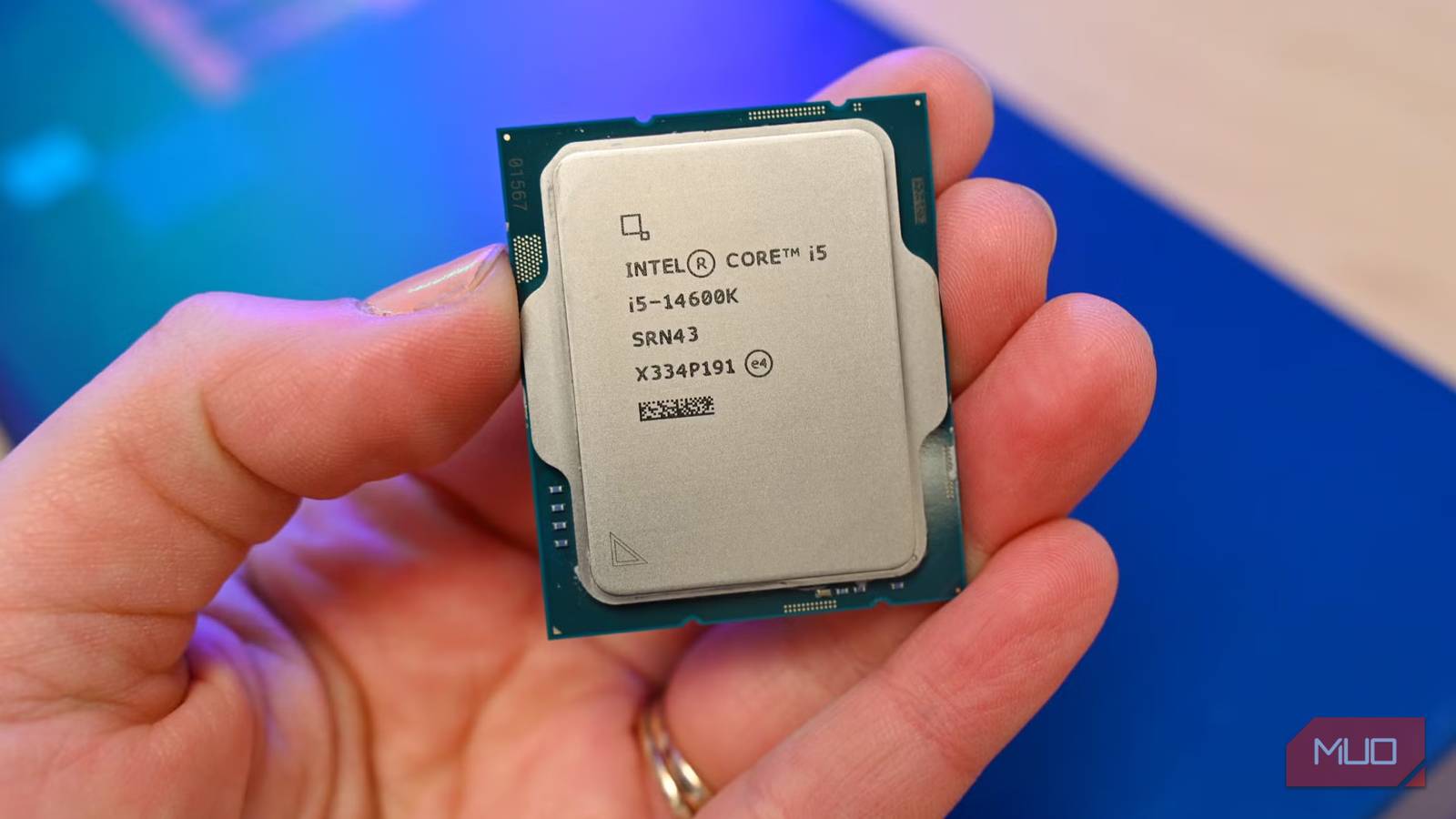
The development timeline of integrated graphics has been fascinating to watch. In fact, integrated graphics were often used to refer to chipset-integrated graphics instead (on the motherboard, not the CPU), before they reached their current form.
They have been consistent lifesavers for anyone who wanted to (reasonably) game without buying a separate graphics card, and I have fond memories of tuning my integrated Radeon Vega graphics to play some of the more demanding games back then.
Time and again, these integrated graphics have proven that you don’t really need the latest and greatest to game at reasonable frame rates.
AMD Llano Fusion A Series APU
The first of its kind from AMD

AMD first introduced Accelerated Processing Units, or APUs, in 2011, combining a 64-bit CPU with a 3D graphics processing unit on the same die. AMD first introduced this with the Llano and Brazos series, targeting high-end and low-end GPU performance, respectively.
The first-generation Llano was used in both desktops and laptops, featuring K10 cores and an integrated GPU based on the Radeon HD 6000 series. It supported DDR3 memory and had a 512 MB limit (in the motherboard BIOS, anyway).
Reactions to Llano were mixed, with its CPU being pinned as a major weak point. That said, Llano worked as a first proof of concept. It proved that powerful APUs were attainable and paved the way for AMD’s dominance in the space, even outside PC gaming.
Intel HD Graphics
The start of a rocky journey and one riddled with disappointment

Intel HD Graphics refers to a small subset of Integrated Graphics Processors developed by Intel. They have also been known as the Intel UHD Graphics, Xe Graphics, and more recently, Arc Graphics.
AMD’s strides to perfecting the APU design forced Intel to follow suit. Intel baked graphics into its CPUs at the time, known as Intel GMA and Intel Extreme Graphics. GMA worked but didn’t put up a strong enough fight, with poor gaming performance all around. Intel had to fight back, and the modern HD graphics were born.
These “HD” Graphics were commonplace amongst the most basic of Intel CPUs, but they were never really good enough. Earlier generations of Intel HD Graphics lacked measurable grunt and feature sets, making them useless for modern games.
They worked fine for the odd eSports title, although you could always buy a GPU for not much money (imagine that today!) and boost performance by a factor of 10.
What Intel iGPUs did right was transcoding. Almost the entire lineup has some form of hardware decoding, which makes them much more appealing for the odd low-wattage NAS-powered homelab.
AMD’s Ryzen lineup
Ryzen upped the ante for integrated graphics as well

The Ryzen lineup was a major step in the right direction for AMD, and one that turned the tables on Intel for the first time in years. Ryzen was a complete breakthrough, but AMD didn’t stop there.
AM4 remains one of the most popular sockets to this day, and my Ryzen 5600G build agrees. The Ryzen series also brought a new set of integrated graphics, with the Vega 7 being the one I was most familiar with, integrated into my 5600G.
While the iGPU was nowhere close to a proper, modern dedicated graphics card, it was still plenty capable of 30 FPS gameplay at 720p and supported modern graphics standards.
These APUs were also overclockable and helped a lot of us survive through the great GPU shortage of the crypto craze. Since they were built on the same AM4 socket, these CPUs also offered a future upgrade path where you could drop in a GPU and get an appreciable boost (even with PCIe 3 limitations in mind).
These APUs refuse to die, and AMD keeps supporting them, which is very much appreciated. Overall, an incredibly solid lineup that only goes uphill from here.
Apple M1
An impressive first attempt that still manages to impress

Apple’s M-series CPUs revolutionized the industry when the original M1 chip arrived in 2020. The chips were incredibly performant while sipping power, making them very efficient.
The M1 series also came with its own integrated graphics, with a 7- or 8-core GPU that was capable of modest gaming performance, assuming you could launch games in the first place. Apple’s transition to ARM did cause game compatibility issues, although things have improved since.
Despite similar raw GPU power and feature support, the M1 lagged behind both Intel and AMD for gaming, since most titles weren’t supported on ARM. That said, this CPU was incredibly efficient and performed similarly when unplugged — all while being passively cooled!
Apple Silicon has only gotten better over time, with the newer M-series chips having much better integrated graphics. Still, M1 was a turning point for Apple and CPUs in general, and very much deserves its place on this list.
AMD Van Gogh and the Ryzen Z1 Extreme lineup
Redefining handheld gaming
AMD continues to dominate the APU space, with Valve’s partnership culminating in a custom APU for the Steam Deck, also known internally at AMD as Van Gogh (or Aerith at Steam, if you use the LCD model or are a Final Fantasy nerd). This was a 4-core, 8-thread Zen 2 CPU paired with custom RDNA 2 graphics. With 8 Compute Units, 16GB of LPDDR5 RAM, and a target resolution of 800p, the Deck was mighty capable and remains a decent option, assuming you can stomach its newer asking price.
AMD followed with a series of APU releases to fill the then-growing handheld gaming space. The Ryzen Z1 Extreme led the lineup, with an upgraded Zen 4 CPU that doubled core and thread counts. It also came with a superior RDNA 3 iGPU that absolutely crushed the Steam Deck — provided you fed it at least 15 Watts of power. This was followed by even more APU releases, with the Z2 Extreme being the current flagship.
Even if the Steam Deck has been outclassed, it’s still remarkably powerful, and nothing beats its efficiency.
Intel also released its Iris Xe and Xe graphics during this time, which offered performance similar to AMD’s APUs but lagged behind in driver support. Intel also introduced a revamped Arc graphics lineup; while it was relatively competitive, it suffered from the same issues as Xe.
AMD Strix Halo
RTX 4060 Mobile performance on an iGPU

AMD’s current iGPU evolution is the Strix Halo lineup. Combining what can only be described as a monster APU with a very powerful Zen 5 CPU, the Strix Halo delivers a shockingly powerful iGPU that can, in many cases, outperform a dedicated RTX 4060 Mobile GPU.
Sure, it isn’t a desktop RTX 4060, but this kind of performance within integrated graphics was simply unheard of, and all while consuming a fraction of the 4060’s power.
And the CPU doesn’t disappoint either, with the flagship AI MAX 395+ (terrible naming, I know) offering 16 cores and 32 threads. This combo can play anything you throw at it at 1440p with no issues, though you’ll still need some FSR to smooth out frame rates.
I’m very much looking forward to whatever the next generation, Medusa Halo, has to offer.
Intel Ultra 3 series
Arc B390 power

Not to be left behind in the dust, Intel released its new Core Ultra Series 3 lineup, with revamped Arc B390 graphics. This is part of the Panther Lake lineup, built on the Xe3 architecture. It packs 12 Xe3 cores and delivers surprisingly strong iGPU performance.
The Arc B390 can reach near RTX 4050 Mobile performance levels. While it’s not as good as the Strix Halo lineup, Panther Lake gets pretty darn close and is arguably much more efficient.
Panther Lake sips power and is probably my second favorite iGPU of all time, with the Strix Halo lineup taking precedence.
Integrated graphics might be the future (for some devices)
Integrated graphics have always carried a bad rep, being associated with poor performance and, in many cases, a complete lack of driver support for games. Things have changed drastically since then, though, and these humble graphics can even run modern AAA releases with relative ease nowadays (assuming you pick the right hardware config).
With the modern lineup of souped-up integrated graphics, I suspect this might be the future for a certain set of devices. As the tech matures and becomes more commonplace, it is reasonable to expect it to slowly phase out dedicated graphics in low- to mid-range gaming laptops.
We’ve already seen an influx of such devices, which, despite their absurd prices, offer a glimpse into the future. The next evolution of integrated graphics is already here, and I hope AMD focuses a bit more on efficiency next time around.