One of the worst victims of the RAMpocalypse has to be the handheld gaming PC segment. Devices like the Steam Deck, which were once meant to be affordable gateways to PC gaming (despite its age), have slowly crept up in price, becoming unattainable for many of us.
In this increasingly bleak future, we might have an unlikely savior: Android. Recent advancements in PC emulation have made it possible to boot and play games like GTA 5 on a modestly powerful mobile chipset.
It might not be here yet, but make no mistake: the future is mobile.
Handheld gaming PCs are still a lot more expensive
Stock is an issue for both, though
The RAMpocalypse came for everyone, but I’d argue it affected handhelds that play games like GTA 5 on a modestly powerful mobile chipset the most. Android gaming devices were no exception either, and we’ve seen price hikes in the past few months alone.
That said, they’re still vastly cheaper than x86 handhelds. A Steam Deck OLED will set you back by around $789 (with only 512 GB of storage), while a maxed out Ayn Odin 3 will cost you $569 instead.
Sure, it has a smaller 6-inch display, but it also happens to be AMOLED, and it has a sharper 1080p resolution, which makes it better than the 800p panel on the Deck. For that money you also get a powerful Snapdragon Dragonwing Q8, which shreds through everything.
It has a whopping 24 GB of LPDDR5X RAM and a terabyte of storage, too. Specs wise, the Odin 3 seems to be a very compelling competitor, save for the fact that it is an ARM-based device running Android.
This means that there’s no easy way to run PC games on the device. Thankfully, there has been an amazing push from the open-source community to get things up to spec, and playing x86 games on Android is no longer a pipe dream.
Android gaming handhelds also have the advantage of having active cooling, which doesn’t let them throttle when running emulators like ARMSX3. That, combined with the more compact and portable nature of such a device, makes it almost ideal for extended gaming sessions.
The user experience isn’t too different from using an actual Steam Deck, and most won’t be able to tell a difference.
The efficiency of ARM and a massive battery is a plus.
I’d much prefer an Android gaming handheld over a bulky x86 one, assuming it could keep up with some of my Steam library.
And we might not have to wait much longer, given the release of Valve’s Lepton and FEX translation layers for Android, which let you play x86 titles without much fuss. Of course, there is some overhead involved, but it performs surprisingly well.
In fact, there have also been several SteamOS “clones” for Android (such as ArmadaOS) that can be flashed onto a device. However, support is still limited to certain specific Android handhelds at the moment.
AramadaOS and other similar operating systems are complete with a functional Game Mode UI along with TDP controls. These also use custom Proton forks, and the end user experience isn’t too different from using an actual Steam Deck, to the point where I doubt most will be able to tell a difference.
While I don’t expect it to run day-one AAA releases any time soon, PC emulation on Android keeps getting better and has a lot less expensive entry point. Android devices are also significantly cheaper, while the hardware is top tier.
Your phone might be the perfect emulation machine already
There are tons of apps available

The average smartphone is way more powerful than you think. Sure, this might not apply to super-budget devices (although you can still get away with some light workloads), but a recent mid-range device holds a lot of compute.
Paired with a decent (read: 8 GB minimum) amount of RAM, you can run a lot of emulators on your existing devices without much issue. It’s also a great way to repurpose an older Android device (or tablet), and you can grab common emulators like PPSSPP from the Play Store itself.
However, a number of such apps must be sideloaded, since they aren’t hosted on the Play Store, which is a bit of an annoyance. This applies to the “exotic” and experimental variety of emulators like ARMSX3, though, which isn’t the vast majority.
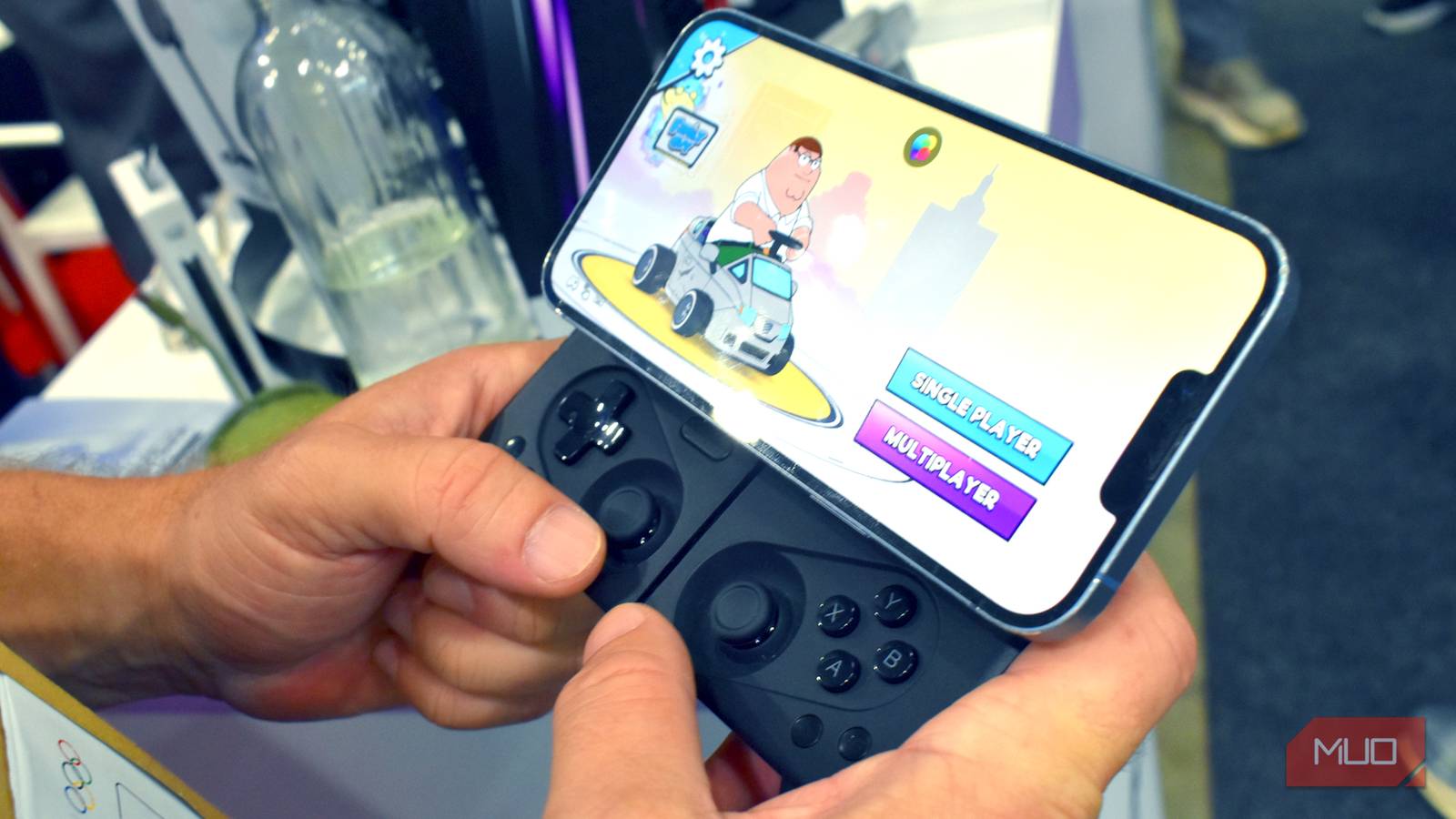
Your existing smartphone is already the perfect handheld, and you can get away with a lot of old-school or classic games on phones. They’re sufficiently powerful to run them, and you can easily pair a controller (or grab an attachment) to complete the experience.
A mainstream release is (hopefully) in the cards
What gaming on Android needs to succeed is a Steam Deck moment. In other words, we need a mainstream release of an Android handheld. And it has to do more than just slap a pretty launcher on top of stock Android.
Part of the solution would be a SteamOS-styled operating system for Android, to ease users in and to add PC games to your library. The second half of this puzzle would be a bit more difficult, since it’d need a major retailer to launch such a product to popularize it (and begin the push from other companies).
Android handhelds haven’t had their breakthrough moment just yet. With the current RAM crisis though, they might just be a viable enough alternative for the vast majority of gamers.