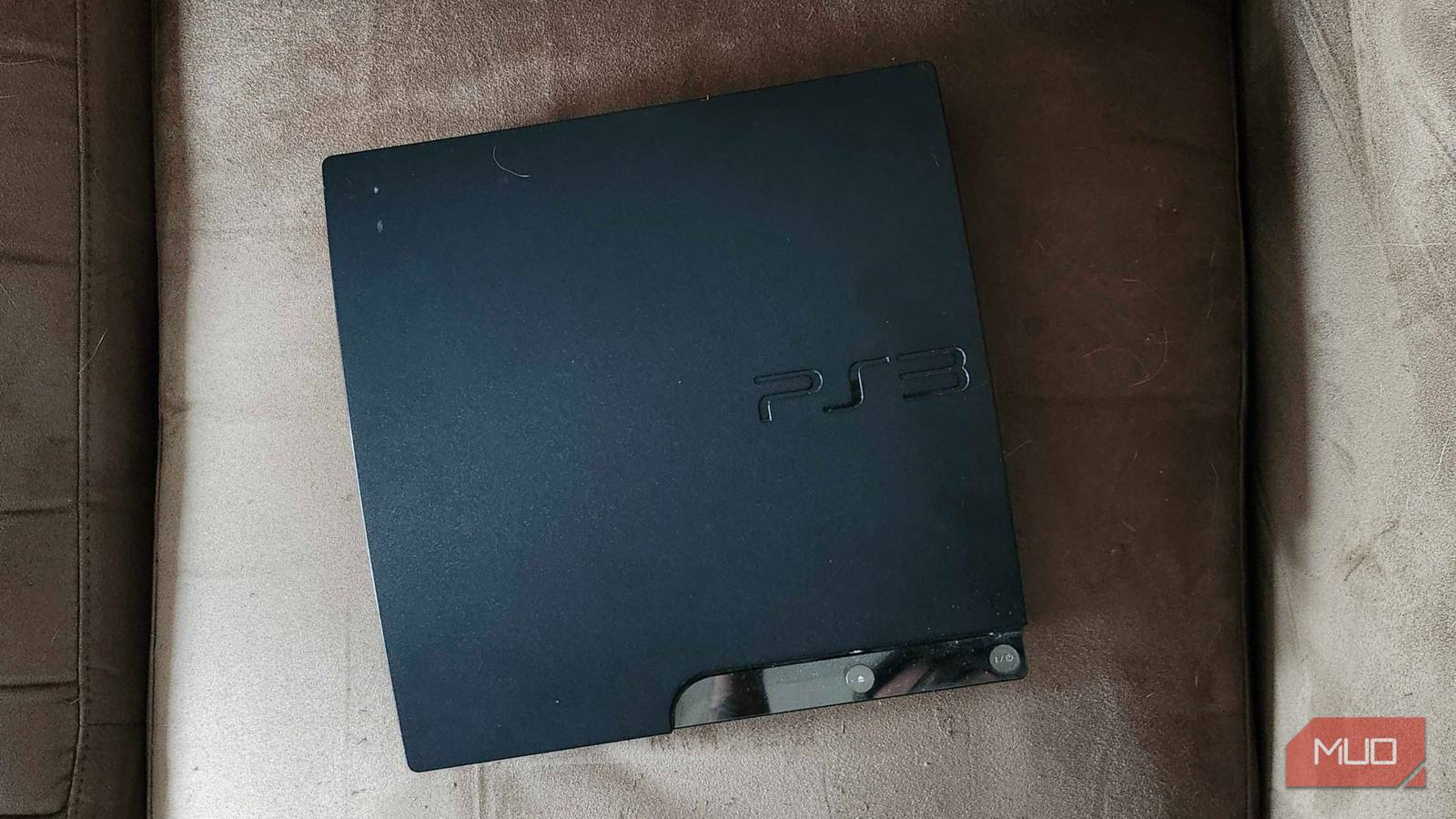
The seventh generation of consoles was an interesting period to witness, with the first half marred by Sony’s fumbles with the PlayStation 3. To put it bluntly, the PS3 was a nightmare to develop for, and many games ran puzzlingly worse when compared to its rival, the Xbox 360.
Most of this is thanks to the rather exotic Cell processor of the console, among other design decisions. This also made emulating the console notoriously difficult, even if modern versions of RPCS3 seem to have no trouble keeping up.
Make no mistake, though, the PS3 was (and in many ways still is) a tough nut to crack, and the work put in by the team in reverse engineering the console is nothing short of monumental.
The CELL processor is at the heart of the PS3
It was also ridiculously difficult to optimize for

Back in November 2006, Sony introduced the world to the PS3, which was a direct successor to its incredibly popular PS2. To say the PS2 was monumental in shaping Sony’s console landscape back then would be an understatement.
It was THE console to get at the time, with powerful hardware and multimedia capabilities (like a DVD drive) that were simply unmatched for its price point. Now Sony faced a peculiar problem: where next?
With both Nintendo and Xbox meandering along the way, Sony had only itself to beat, and it strove to make the PS3 the complete, all-in-one home entertainment device.
The PS3 had a ton of features, including a full-featured Blu-ray player and access to online matchmaking, which dominated back then. Powering it all was the Cell Broadband Engine, a custom processor built for the PS3.
The Cell engine was special, and was built in a joint effort by Sony, Toshiba, and IBM. But Sony didn’t just want to run games with this special CPU — they were also looking to have it used for general computing.
Time for a new CPU

And so it birthed a special processor. The Cell/B.E. CPU is based on RISC and is composed of multiple components. This includes a general PowerPC core (PPE or Power Processing Element) combined with several coprocessors known as the SPEs (Synergistic Processing Elements). The SPE worked on multimedia and vector processing, while the PPE was mostly relegated to CPU-heavy tasks.
This made the processor incredibly capable, but only if you could code for it. The weird architecture of the console did not do it any favors either, and developers were initially left stumped at Sony’s weird little console.
Combine that with the relatively weaker RSX GPU die (based on an Nvidia G70 chip), and you get games that generally ran worse on Sony’s hardware.
Yes, there have been games like God of War 3 and The Last of Us, which showcase the true power of the PS3, but these are far from the norm and came much later. Sony’s ridiculous asking price of $500 for the base 20 GB model was a slap in the face, especially when the competition was going for a hundred dollars cheaper.
The end result was an initially disastrous launch, and a console that just wasn’t optimized enough to run games properly on it. In comparison, the Xbox 360 almost always maintained a noticeable lead, and its easier system design made porting games over to it much less of a hassle.
Still, when used right, the PS3 managed to shatter expectations. There are a ton of graphically impressive titles for the PS3, and these games made full use of the hardware on offer. Which coincidentally made them even more difficult to emulate.
RPCS3 can play most of the PS3 library without issues
It’s been a crazy year for emulation
For years, the PS3 remained a difficult beast to crack open. The first release of RPCS3 was woefully inadequate, lacking support for most of the PS3’s library. It didn’t help that there was almost zero public documentation on the Cell processor, and so most of the work involved tedious reverse-engineering.
RPCS3 ran only simple demos and homebrew for a while, until a major breakthrough was achieved in the form of both Cell and RSX emulation. And RPCS3 is practically unrecognizable today, having over 80% of the PS3 library playable from start to finish.
Technically challenging games like God of War 3 and Uncharted 3 are now all mostly playable, and it just keeps getting better. There’s official Linux and macOS support, along with access to patches (which let you modify game settings) that can let you upscale the game to 4K native.
And PS3 emulation isn’t even accounting for the rest of the console jailbreaking scene. PS4 emulation is already well-established at this point, with PS5 emulation showing very promising signs of a work-in-progress. Even the Nintendo Switch 2’s security is starting to crack, and it’s been a truly wonderful year for homebrew.
Sony learned from its mistakes and came back swinging
The PS3 was a historic low point for Sony. The console cost too much and suffered from a plethora of issues. The Cell processor was prone to failure, and it wasn’t uncommon for first-generation PS3s to slowly die out over time.
That’s not counting the lack of any heavy hitters on the system in its first half, or the poorer quality of its third-party game ports. The Xbox 360 was the superior option, and it also happened to be cheaper — even if it had its own fair share of hardware issues.
Sony had no choice but to correct course immediately. They began by re-releasing the PS3 in a Slim variant (followed by a Super Slim version), along with a bump down in pricing. This new PS3 Slim was quieter and less prone to failures.
Combine that with a massive push for excellent, console-defining first-party exclusives, and the PS3 slowly but surely started to gain traction. The final years of the PS3 were full of great, optimized titles that took advantage of the Cell processor and Sony’s various quirky design decisions and, finally, PlayStation fans were eating good.
Then came the next generation, and Sony took all these complaints to heart. The PS4 was designed from the ground up to be as developer-friendly as possible, which is perhaps why it eventually started PlayStation’s transition to x86.
And it paid off big time. The PS4 was a resounding success, while Microsoft seemed to pull off a Sony with its Xbox One, making all the wrong decisions. It resulted in the industry shift, and where we are right now, with PlayStation having complete market dominance.