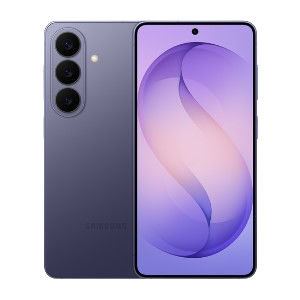
No one buys a phone based on its performance alone. The design, hardware, battery, software, and cameras all factor into your decision, but benchmark results still play an important role in determining whether a smartphone is right for you. You might think that all the flagship Android phones can handle just about everything you might throw at them, but that isn’t the case. Google Pixel phones have notoriously featured weak Tensor chipsets with meager graphics performance, and you might notice if you play a lot of mobile games.
Is the Tensor G6 chip inside the Pixel 11 series any different? I’ve been testing Pixel 11 models for nearly two weeks, and put them up against the Samsung Galaxy S26 and iPhone 17 series to find out whether Google is still behind the curve. As it turns out, the Tensor G6 does slightly boost performance under specific workloads. Overall, the Pixel 11 still can’t match the performance of an iPhone or Galaxy.
The Pixel 11’s Tensor G6 is slightly better for graphics
It’s only a marginal upgrade over the Tensor G5 in the Pixel 10 series
Graphics performance is an area in which Tensor chips have historically struggled, so let’s start there. When we test the Tensor G6 and the Pixel 11’s graphics capabilities, we’re not looking to see how highly they score in a particular benchmark test. Instead, we’re trying to get a feel for how the Pixel 11 will handle real-world workloads, such as mobile gaming. With the 120Hz screens on modern Android phones, it’s not unreasonable to expect your flagship device to render true AAA titles on the Google Play Store at high refresh rates.
Samsung and Apple chips have no problem hitting 120FPS while rendering certain demanding titles, like Fortnite, Call of Duty: Mobile, or Genshin Impact. Google Pixel phones can’t match that level of mobile gaming performance, and the Tensor G6’s benchmark results explain why. In 3DMark’s Steel Nomad Light benchmark, which is designed to simulate a mobile gaming workload, we see the Pixel 11 series’ Tensor G6 processor post scores around 100 points higher than the Pixel 10’s Tensor G5 processor.
The base Pixel 11 we tested has 12GB of memory, while both the Pixel 11 Pro Fold and the Pixel 10 Pro we tested have 16GB of memory. RAM didn’t seem to impact the results much — the bigger difference was the upgraded Tensor chip.
|
Geekbench 7 (GPU) |
Geekbench 6 (GPU) |
3DMark Steel Nomad Light |
3DMark Steel Nomad Light stress test (Lowest / Best / Stability) |
|
|---|---|---|---|---|
|
Google Pixel 11 (Tensor G6) |
3,254 |
7,714 |
1,117 |
805 / 1,163 / 69.2% |
|
Google Pixel 11 Pro Fold (Tensor G6) |
3,249 |
7,657 |
1,122 |
678 / 767 / 88.4% |
|
Google Pixel 10 Pro (Tensor G5) |
2,041 |
4,581 |
1,007 |
954 / 1,004 / 95% |
Google’s Tensor G5 processor includes a PowerVR DXT-48-1536 GPU clocked at 1.1GHz, whereas the newer Tensor G6 chip features a PowerVR CXTP-48-1536 clocked at 1.29GHz. The newer graphics component explains some of the better results we’re seeing. In both GPU benchmarks for Geekbench 6 and Geekbench 7, the Tensor G6 significantly outperformed the Tensor G5. The Pixel 11 scored 60% higher than the Pixel 10 Pro in the Geekbench 6 graphics benchmark, suggesting a major improvement.
Whether you’ll actually reap the benefits of the extra graphics performance in mobile games remains to be seen. 3DMark’s Steel Nomad Light stress test is a 20-minute gauntlet that gauges how a smartphone performs under heavy, sustained loads. While the Pixel 10 Pro never performed very well, it did post an impressive 95% stability score. This means that, although it isn’t very fast, it doesn’t thermal throttle during long mobile gaming sessions. The Pixel 11’s Tensor G6 chip did perform better at its best, but it thermal throttled as the stress test continued, resulting in a measly 69.2% stability score.
The Pixel 11 Pro Fold didn’t perform much better. Although it has a respectable 88.4% stability score, the Pixel 11 Pro Fold’s best stress test lap score was lower than the Pixel 11’s worst lap score. So, the Pixel 11 series does have a bit of extra gaming power thanks to Tensor G6, but you may not be able to use it during longer gaming sessions.
Why aren’t Tensor chips better at AI processing?
I thought this was supposed to be what Pixels were all about

I could forgive the Tensor G6 for its lackluster gaming performance if it was a class-leader in on-device AI processing. Unfortunately, the Tensor G6 chip looks to be losing to both Apple and Qualcomm processors for another year. Google’s Tensor G6 chip uses a fifth-generation tensor processing unit (TPU) that is said to improve performance by 50%.
The results paint a different picture. Geekbench AI is a benchmark that tests a phone’s ability to run on-device AI models using lower-precision integers, such as 8-bit integers. This uses a process called quantization, which converts larger floating-point numbers to smaller integers. It’s a critical test that provides a hint of how your phone will be able to run on-device AI models, both now and in the future. In Geekbench AI’s quantization test, the Tensor G6 came in last.
|
Geekbench AI (quantized) |
|
|---|---|
|
Google Pixel 11 Pro Fold (Google Tensor G6) |
2,930 |
|
Samsung Galaxy Z Fold 8 (Snapdragon 8 Elite Gen 5 for Galaxy) |
4,519 |
|
Samsung Galaxy S26 Ultra (Snapdragon 8 Elite Gen 5 for Galaxy) |
6,080 |
|
iPhone 17 Pro Max (Apple A19 Pro) |
6,542 |
|
Motorola Razr Fold (Snapdragon 8 Gen 5) |
4,101 |
The Pixel 11 Pro Fold scored more than 1,000 points lower than the second-worst phone, the Motorola Razr Fold. The base Snapdragon 8 Gen 5 inside the Razr Fold isn’t an Elite chip, and it still significantly outperformed the Tensor G6 in AI workloads. The Snapdragon 8 Elite Gen 5 and Apple A19 Pro phones performed even better — the Galaxy S26 Ultra and iPhone 17 Pro Max scored more than twice as high as the Pixel 11 Pro Fold.
Can Google overcome the performance deficit with optimization? I’m not so sure. For one, the Pixel 11 Pro and Pixel 11 Pro XL now start at 12GB of memory, down from 16GB of memory on the Pixel 10 series. RAM is crucial to AI processing, so this isn’t a good sign. Additionally, Google is starting to wean off local processing, as it shifted Pixel Screenshots from being an on-device exclusive to incorporating cloud processing. The Pixel 11’s new feature, Magic Capture, uses the cloud as well.
Based on these results, and Pixel exclusives starting to use more cloud processing, I’m worried about the Tensor G6’s AI performance. If the chipset is behind today, that problem will only become more glaring as the Pixel 11 ages.
iPhones and Galaxy phones run laps around the Pixel 11
Google’s Tensor G6 can’t keep up with the latest Apple and Qualcomm chips

We’ve honed in on the Tensor G6’s graphics and AI processing abilities, so let’s zoom out and look at how it fares overall against the competition. In basic CPU performance, the Tensor G6 actually holds its own against the base Snapdragon 8 Gen 5 in single-core tests. The Snapdragon 8 Gen 5 edges out the Tensor G6 in multi-core workloads, but that’s because the former has eight cores and the latter only has seven. Google’s Tensor G6 CPU consists of an Arm C1-Ultra big core, four Arm C1-Pro cores, and two Arm C1-Pro efficiency cores.
|
Google Pixel 11 Pro Fold (Google Tensor G6) |
Samsung Galaxy Z Fold 8 (Snapdragon 8 Elite Gen 5 for Galaxy) |
Motorola Razr Fold (Snapdragon 8 Gen 5) |
Samsung Galaxy S26 Ultra (Snapdragon 8 Elite Gen 5 for Galaxy) |
iPhone 17 Pro Max (Apple A19 Pro) |
Google Pixel 10 Pro (Google Tensor G5) |
|
|
Geekbench 7 (single / multi / GPU) |
1,967 / 4,289 / 3,249 |
2,996 / 9,967 / 14,775 |
1,103 / 5,717 / 13,430 |
— |
— |
1,927 / 5,568 / 2,041 |
|
Geekbench 6 (single / multi / GPU) |
2,655 / 5,963 / 7,657 |
3,564 / 10,173 / 19,938 |
2,612 / 8,809 / 17,513 |
3,606 / 10,614 / 23,144 |
3,801 / 9,740 / 45,978 |
2,125 / 4,943 / 4,581 |
|
3DMark Steel Nomad Light |
1,122 |
2,109 |
1,883 |
2,495 |
2,567 |
1,007 |
|
Steel Nomad Light Stress Test (Lowest / Best / Stability) |
678 / 767 / 88.4% |
1,134 / 1,484 / 76.4% |
1,124 / 2,021 / 55.6% |
1,781 / 2,309 / 77.1% |
1,912 / 2,558 / 74.8% |
954 / 1,004 / 95% |
|
CrossMark (Overall / Productivity / Creativity / Responsiveness) |
1,402 / 1,559 / 1,228 / 1,518 |
1,829 / 1,930 / 1,794 / 1,652 |
1,052 / 829 / 821 / 4,518 |
2,512 / 2,068 / 1,890 / 10,550 |
— |
1,635 / 1,293 / 1,100 / 10,845 |
Compared to the flagship Snapdragon 8 Elite Gen 5 for Galaxy, though, the Tensor G6 flounders. The Galaxy S26 Ultra scored 3,606 points in Geekbench 6’s single-core CPU test, whereas the Pixel 11 Pro Fold could only hit 2,655 points. In graphics tests, you can forget about it. The Galaxy S26 Ultra scored 202% higher than the Pixel 11 Pro Fold in the Geekbench 6 GPU test, and yes, you read that number right.
Unsurprisingly, the Apple A19 Pro chip in the iPhone 17 Pro Max also beats the Tensor G6 chip in every test. Once again, there’s a clear loser here. Apple and Qualcomm are going pound for pound, but Google is falling further behind.
How much stock should you put into benchmark results?
Benchmark results help you understand the raw capabilities of your smartphone, but they aren’t everything. Consider these results in the context of how you plan to use your device. If you’re a mobile gamer that wants the best graphics and highest refresh rate out of their handset, a Galaxy or iPhone would be a better fit than a Pixel. If you care about the overall software experience more than specialized performance, a Pixel might be the better choice, despite its weaker hardware.
-

- SoC
-
Google Tensor G6
- Display
-
6.3-inch Actua display
- RAM
-
12GB
- Storage
-
256 or 512GB
- Battery
-
4985 mAh
- Brand
-
Google
The starter Google Pixel 11 isn’t the flashiest Android phone of the bunch, but it’s the one that resonated with me the most. The slimmer camera bar makes the Pixel 11 feel modern and sleek, and it’s powered by the same Tensor G6 processor as the rest of the series. For $900, this is a solid Android flagship.
-
- SoC
-
Snapdragon 8 Elite Gen 5
- Display
-
6.3-inch Dynamic AMOLED 2x
- RAM
-
12 GB
- Storage
-
256 or 512 GB
- Battery
-
4,300 mAh
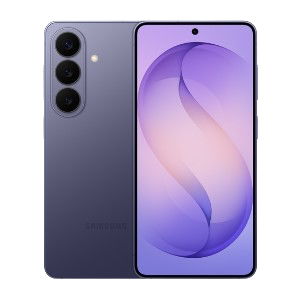
The Samsung Galaxy S26 features a 6.3-inch 120Hz display, a Snapdragon 8 Elite Gen 5 chip, and a 4,300 mAh battery. It includes a 50MP main camera with enhanced AI software, 256GB of base storage, and a slim 7.2mm profile, focusing on fast daily performance.