If you’ve ever owned an inkjet printer, you already know the scam that it can be. You buy the machine for a relatively low price, thinking you got a good deal, and then spend the next few years being bled dry buying ink cartridges. The playbook is so common even Bambu Lab brought it to 3D printing.
But there has to be a better way, right? Try to save money with a refilled or third-party cartridge, and suddenly, your printer doesn’t detect cartridges anymore. But now these issues are going to be a thing of the past, because printers have finally arrived in the open-source era
A printer built around freedom, not cartridges
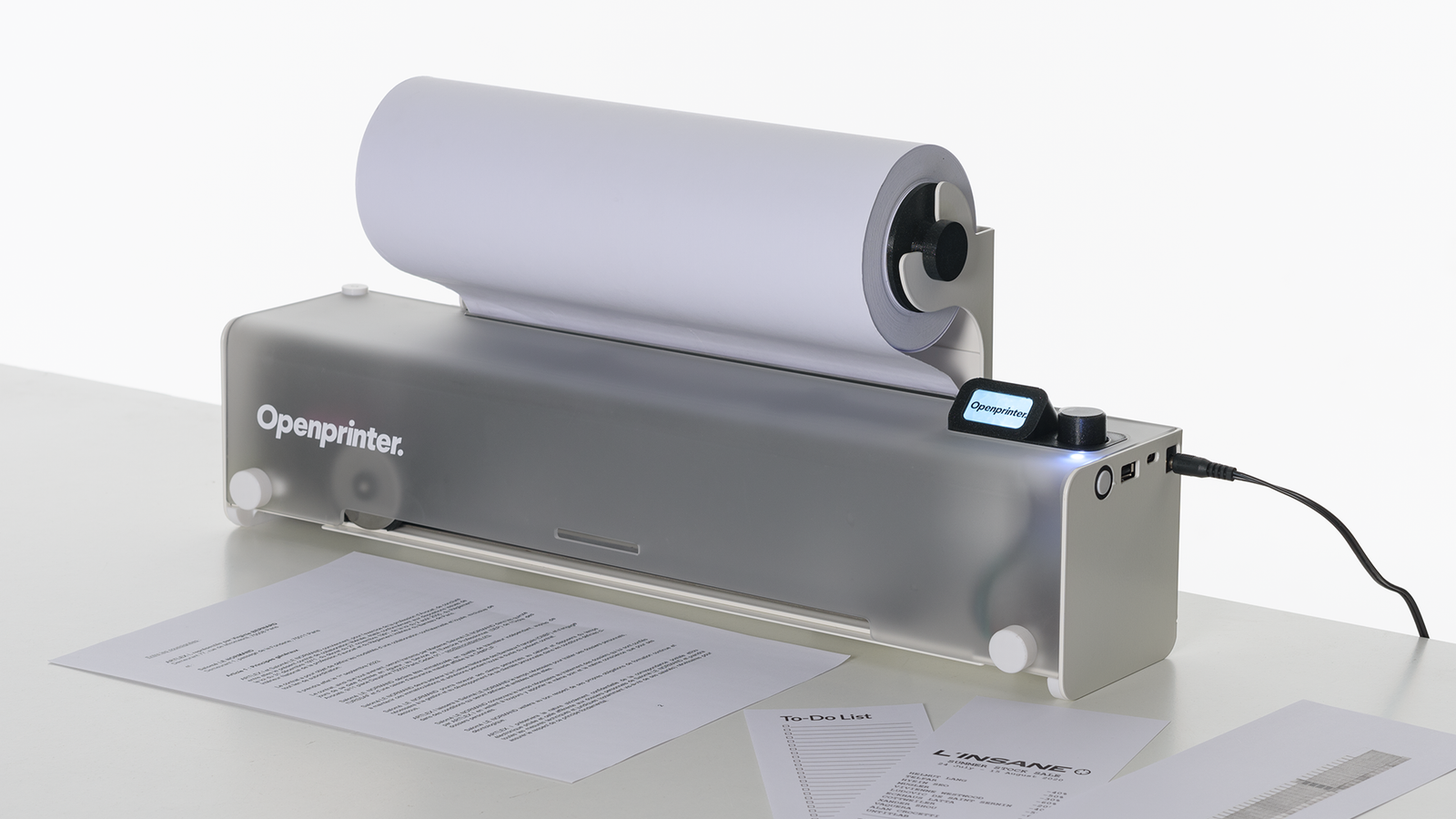
OpenPrinter is an open-source project designed to make printing repairable, transparent, and free from vendor lock-in

OpenPrinter is a working prototype from a small, Paris-based team led by mechanical engineer Leonard Hartmann, with backing from partners like Bpifrance and the design school ENSCI. It’s an open-source printer built on the Raspberry Pi Zero W with an STM32 microcontroller as the cartridge board that features a fully repairable design and a reliable ink system.
It uses off-the-shelf HP ink cartridges, like the HP 63 or HP 302 depending on your region, which happen to have the printhead built directly into the cartridge itself. These cartridges are also refillable, and third parties sell replacement ink at a fraction of the cost.
The printer isn’t a real product you can buy yet. There’s no price, funding goal, shipping date, or confirmed speed at the moment. It lives on Crowd Supply, a crowdfunding platform for hardware projects, but the campaign page is yet to go live. The team has shown off a video of the prototype printing in black and color on both cut sheets and paper rolls, and it recently picked up a nomination for the France Design Awards. Call it a promising proof of concept rather than something you can actually buy today.
No chipped cartridges required
By using refillable ink systems and open hardware, OpenPrinter sidesteps the authentication tricks used by many commercial printers

The DRM-dodging trick isn’t some clever hack that defeats an authentication chip; it’s much simpler than that. OpenPrinter’s firmware just never checks for one in the first place. There’s no code anywhere in the system looking for an official HP signature before it’ll let you print. The black and color cartridges also run independently of each other, so running out of one color doesn’t hold your black-and-white print jobs back — a direct dig at a lot of consumer printers available today.
As mentioned before, the printer is powered by a Raspberry Pi Zero W talking to an STM32 microcontroller, with a small screen and jog wheel for controls. It uses CUPS, the open-source print server that already powers printing on Linux, macOS, and plenty of other platforms, so there’s no proprietary driver to install. Once finished, the hardware and firmware designs are meant to be published publicly, though under a non-commercial license, which means in theory you should be able to build your own at home. However, Open Tools has also filed a patent on the design, which is an odd look for a project built around openness.
Taking on one of tech’s most frustrating industries
Decades of proprietary cartridges, firmware updates, and DRM have turned home printing into a recurring expense for consumers
When you look at the big players in the commercial desktop printer industry, you’ll quickly understand why OpenPrinter’s promise is a big deal. HP has faced multiple lawsuits over its Dynamic Security firmware, which has repeatedly bricked support for third-party cartridges, sometimes years after customers bought the printer.
The company ended up settling several of these cases, including a 2018 settlement worth $1.5 million and a 2022 European settlement worth up to $1.35 million, all without admitting wrongdoing. The premise is simple: HP loses money on the printer itself, only to make it back on cartridges, which are a repeating consumable.
Ironically, Canon ended up making the strongest case against the whole practice. During the 2021 chip shortage, it shipped toner cartridges without the usual authentication chip and told customers how to work around the resulting warning messages, essentially admitting that the chip was never necessary for print quality in the first place. Epson has faced its own firmware-related lawsuit over blocked third-party cartridges, which settled in 2025. Even Brother, which launched a $120 printer that makes you forget about printer ink, got accused of quietly degrading third-party toner performance through a firmware update, although the company has denied doing so.
Changing printing won’t happen overnight
Building hardware is difficult, and competing with established printer giants will take time, funding, and community support
None of this makes OpenPrinter a slam dunk. Its independence only goes so far, since it still depends on HP continuing to sell cartridges that happen to be refillable. If HP redesigns those cartridges, OpenPrinter’s whole approach falls apart. The printhead patents held by HP, Canon, and Epson are also a genuine wall that’s kept hobbyist inkjet printers from becoming real products.
The business model that makes cheap printers and expensive ink so profitable isn’t going away just because a small team in Paris built a nicer alternative. Still, OpenPrinter comes at a time when regulators are starting to pay more attention than usual, with the EU’s right to repair rules set to take effect by mid-2026 and the FTC on record against unfair repair restrictions in the US. Whether or not OpenPrinter ever ships in a box you can buy, it’s a useful reminder that cartridge DRM was never a technical necessity. It was always a choice, and one that was never in the favor of the people actually buying the printers.