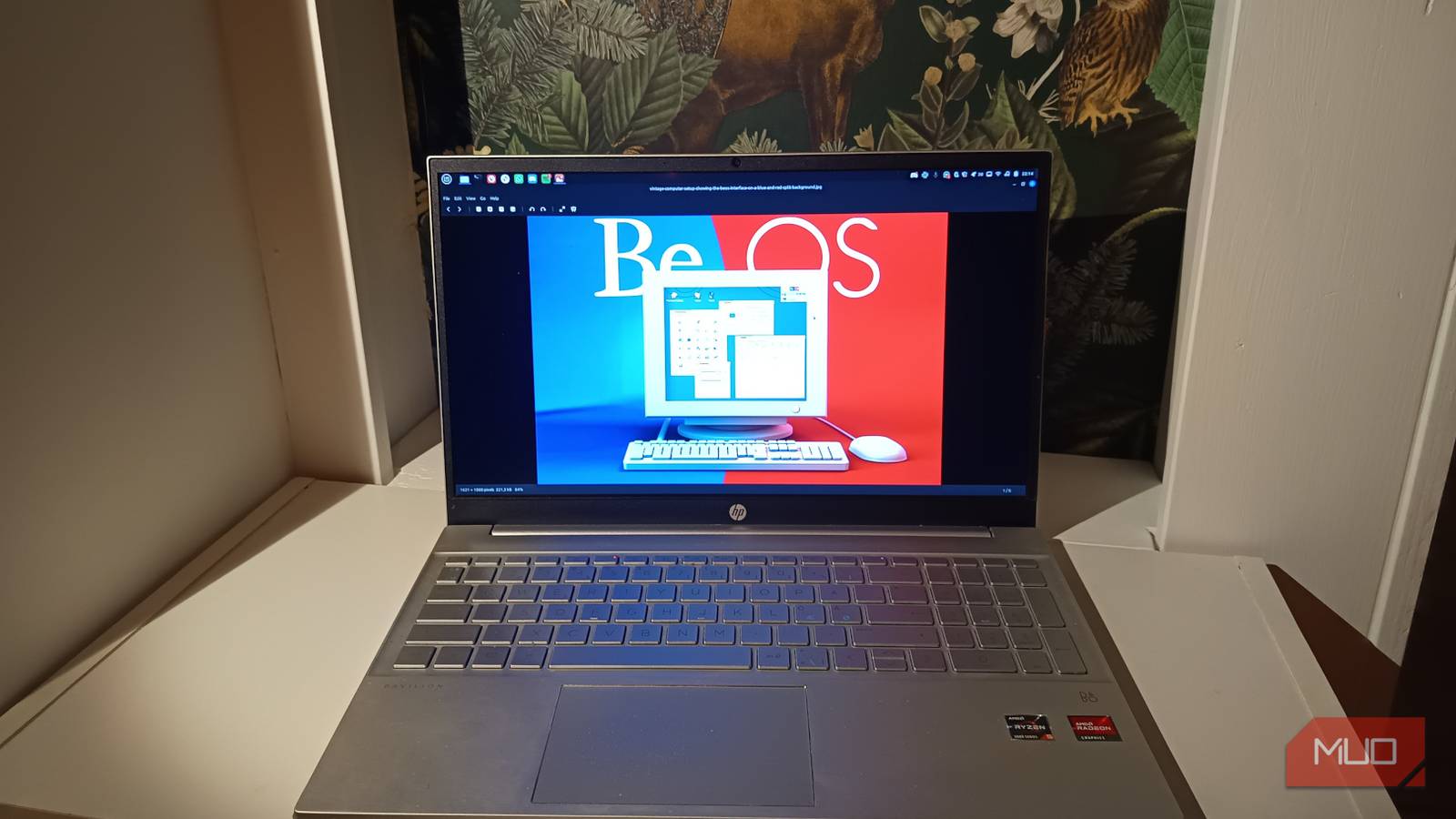
In September 2003, Microsoft wrote a check for $23,250,000 to a company that no longer really existed. Be Inc., the startup behind BeOS, had sold off essentially everything two years earlier and was in the middle of dissolving itself when the money arrived. The company sued Microsoft from beyond the grave, alleging that the Windows maker’s OEM licensing practices had destroyed its business, and Microsoft [paid to settle](https://news.microsoft.com/source/2003/09/05/microsoft-corp-and-be-inc-reach-agreement-to-settle-litigation/) while admitting no wrongdoing. How does a dead operating system win a payout like that? The answer involves a hidden hard drive partition, a confidential license agreement, and one of the strangest footnotes in the history of the PC.
The operating system that embarrassed 90s Windows
Built for media when Windows was built for spreadsheets
BeOS came from Be Inc., which was founded in 1990 by Jean-Louis Gassée, the former head of Apple’s Macintosh division. While Windows 95 and 98 were still dealing with legacy DOS baggage, BeOS was written from scratch as a “media OS” with pervasive multithreading, native multiprocessor support, and a 64-bit BFS file system with database-like metadata queries. Video played smoothly while other apps stayed responsive, which sounds ordinary now but looked like magic in 1996. It was just more advanced than Windows was at the time.
Apple came close to buying Be in 1996 to replace the aging classic Mac OS; accounts differ on the exact figures, but the gap between Gassée’s asking price and Apple’s offer was at least $75 million, and Apple walked away. It announced a $400 million deal for NeXT instead, getting Steve Jobs back in the bargain. Be pivoted to selling BeOS for ordinary Intel PCs, and that put it right in the way of Microsoft as a competitor.
Hitachi shipped BeOS on real PCs, but buyers never saw it
The bootloader Microsoft didn’t want you to have

In the late ’90s, Be offered BeOS to major PC makers for free, just to get it preinstalled alongside Windows. According to Byte columnist Scot Hacker’s detailed 2001 account, Be held talks with Dell, Compaq, Micron, and Hitachi. Only Hitachi shipped anything: the Flora Prius line, sold in Japan with Windows 98 and BeOS both installed on the drive.
Then, as per Hacker’s reporting, Hitachi heard from Microsoft shortly before shipping and was reminded of the terms of its Windows OEM license. Hitachi altered the bootloader so that the machines booted straight into Windows with no menu, leaving the BeOS partition invisible. Be had to publish instructions on its website explaining how customers could unhide an operating system they had already paid for. Most Flora Prius owners likely never knew it was there.
The mechanism behind this was the confidential Windows license that PC makers signed, which Microsoft classified as a trade secret during the DOJ antitrust trial. Hacker reported that it barred any machine shipping Windows from offering a non-Microsoft OS as a boot option. That’s why, for years, you could not buy a dual-boot PC from any major manufacturer, no matter what. Judge Jackson’s 1999 Findings of Fact mentioned BeOS, but the bootloader issue never became central to the government’s case, which focused on browsers instead.
If you dual-boot today (I run Windows 11 and Linux side by side on my own laptops), it’s worth remembering that a boot menu was once contract poison. Modern annoyances like Fast Startup mangling your Linux partitions feel almost quaint in comparison.
The lawsuit came after Be shut down
$23 million, no apology

By 2001, Be was out of time. It sold its assets and intellectual property to Palm for a reported $11 million in stock, a fraction of what Apple had once discussed, and shareholders approved a dissolution plan that November. Crucially, Be kept one asset back: the right to bring antitrust claims.
In February 2002, what remained of Be filed suit in federal court in Maryland, blaming Microsoft’s anticompetitive practices for the destruction of its business, with the Hitachi episode as a centerpiece. The case never reached a verdict, though. In September 2003, the parties announced a mediated settlement: Microsoft paid Be $23,250,000 after attorneys’ fees, admitted no wrongdoing, and kept every other term confidential. The money went to Be’s dissolution costs and then shareholders of record.
Of course, Microsoft never conceded the license worked the way Be alleged. But you don’t pay eight figures to a dissolved company over claims you consider frivolous. The $23 million payment is the closest thing to a verdict this story will ever get.
The dead OS that refuses to stay buried
BeOS itself never came back. Palm had no interest in a desktop OS, and the code went into the vault. The day after the Palm deal was announced, though, fans started an open-source recreation that became [Haiku](https://www.haiku-os.org/), which is still in active development today and working toward its R1 beta 6 release. My colleagues have taken it for a spin in their tours of bizarre operating systems and alternatives beyond Windows, macOS, and Linux, and it remains fast, charming, and utterly and delightfully out of step with everything else.