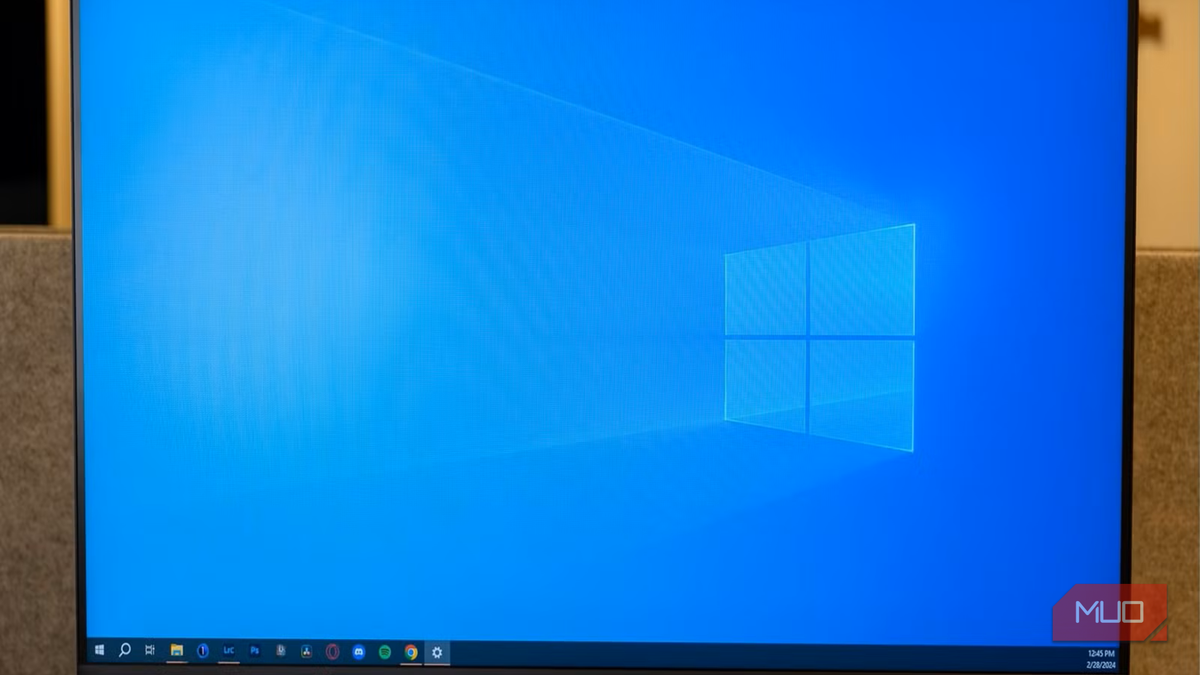
Windows 10 has been dead for the better part of a year now, at least according to Microsoft’s calendar. Regular support ended October 14, 2025, taking free software updates, technical assistance, and security fixes with it for PCs outside Microsoft’s Extended Security Updates program.
Yet in July 2026, StatCounter still measured 29.83 percent of worldwide Windows desktop web usage coming from Windows 10. Windows 11 sat comfortably ahead at 68.93 percent, so the newer operating system has already won the raw usage-share battle. Nearly three in ten is still an awfully large number for an OS Microsoft officially retired almost ten months ago. That’s the sense in which Windows 11 still hasn’t quite beaten the operating system it replaced.
I’ve used Windows 11 as my daily driver for long enough that going back isn’t particularly tempting, but Windows 10 has proved remarkably hard to kill. Some PCs can’t officially make the jump. Others are still doing whatever their owners need them to do, without much reason to disrupt a working setup.
StatCounter can’t tell us exactly why so much Windows 10 usage remains. Nearly five years after Windows 11 arrived, though, the old operating system is still hanging around.
The line in the sand was drawn by silicon, not software
TPM 2.0 turned “should I upgrade” into “can I upgrade”
A perfectly usable older PC can fail Windows 11’s compatibility check without actually feeling old. It may still handle a browser, spreadsheets, video calls, and everything else its owner bought it for, yet Microsoft’s upgrade rules draw the line somewhere else. Windows 11 requires TPM 2.0, UEFI firmware with Secure Boot capability, and a processor on Microsoft’s compatibility list, in addition to the more conventional RAM and storage requirements.
That leaves plenty of older PCs outside the officially supported upgrade path even when their performance remains perfectly adequate. A seven- or eight-year-old office PC can still feel completely serviceable while failing Microsoft’s check because one part of the hardware falls outside the security baseline. There are ways to get Windows 11 running on an old computer anyway, although doing so doesn’t suddenly make that hardware officially supported.
To be fair to Microsoft, the TPM requirement isn’t completely arbitrary. Windows 11 uses TPM 2.0 for features like Windows Hello and BitLocker, and I understand why Microsoft wanted a higher security floor this time around.
The awkward part is that Microsoft’s definition of an eligible PC and an owner’s definition of a useful PC don’t always expire at the same time. Hardware can keep doing its job years after the operating system vendor decides it no longer clears the bar for the next release.
That leaves Linux as an interesting escape hatch for some of these machines. A PC that falls short of Windows 11’s requirements may still run a current Linux distribution perfectly well, and Linux Mint has become a particularly approachable Windows replacement that even lets you test the operating system from a USB drive before committing to an installation. I don’t expect every Windows 10 holdout to suddenly switch, obviously, but there’s something a little odd about calling a PC too old for Windows 11 when the same machine can happily run a current Linux distro for years.
Microsoft kept moving its own finish line
The “final” cutoff kept getting less final

Microsoft’s handling of Extended Security Updates makes the transition even more interesting. When the company announced a consumer ESU option in October 2024, it described it as a one-year extension costing $30. The current program goes considerably further. Eligible Windows 10 22H2 consumer PCs can now receive critical security updates through October 12, 2027, two years after regular support ended.
Depending on how you enroll, Microsoft even offers ways to get that coverage without paying the original $30 fee.
I wouldn’t go so far as to call that an admission that Windows 11 failed, but the transition clearly needed a much longer bridge than Microsoft originally announced for consumers. Microsoft went from offering consumers one extra year of security updates to keeping enrolled Windows 10 PCs patched until October 2027. Whatever you call October 2025, Microsoft is now preparing to keep some of those supposedly finished PCs secure for another two years.
The finish line turned out to have quite a bit of room behind it.
Familiarity is doing more work than people give it credit for
The devil you know still boots faster than the one you don’t

Hardware eligibility only explains part of Windows 10’s persistence. Windows 11 also spent years asking longtime Windows users to accept changes to parts of the interface that had already settled into familiar workflows.
The taskbar is a good example. Windows 10 let you move it to any edge of the screen. Windows 11 launched without that flexibility and kept it missing for years. Microsoft only began previewing movable taskbars again for Windows Insiders in May 2026, with the feature still under development and carrying limitations.
Windows 11 Home and Pro for personal use also require an internet connection and Microsoft account during initial setup. None of this makes Windows 11 unusable, but it adds friction to an upgrade whose predecessor may already be doing everything its owner expects.
Then there’s plain old inertia. A computer that already runs your browser, printer, work software, peripherals, and familiar shortcuts has to give you some reason to disturb that setup. Free doesn’t automatically mean compelling when the machine in front of you already works.
Of course, that 29.83 percent isn’t one giant protest vote against Windows 11. Some PCs can’t officially upgrade, others will be managed or specialized systems, and plenty probably just haven’t moved yet.
What the number does tell us is that Microsoft’s end-of-support deadline wasn’t enough to make Windows 10 usage collapse overnight.
Windows 11 won the numbers without finishing the replacement
Windows 11 has already won the numbers. It’s the current version of Windows; it’s actively developed, and Microsoft’s attention is clearly focused there. What’s remarkable is how long the handoff takes to finish. Nearly five years after Windows 11 arrived, Windows 10 still accounts for a sizable chunk of measured Windows desktop usage, while Microsoft is preparing to keep eligible consumer machines patched into 2027.
Maybe that’s the part Windows 11 has struggled with from the beginning. Windows 10 didn’t suddenly stop being useful when its replacement showed up. For plenty of PCs, it kept doing the boring thing an operating system is supposed to do: boot up, run the software, and stay out of the way.
Windows 11 replaced Windows 10 years ago. Finishing the replacement is taking considerably longer.