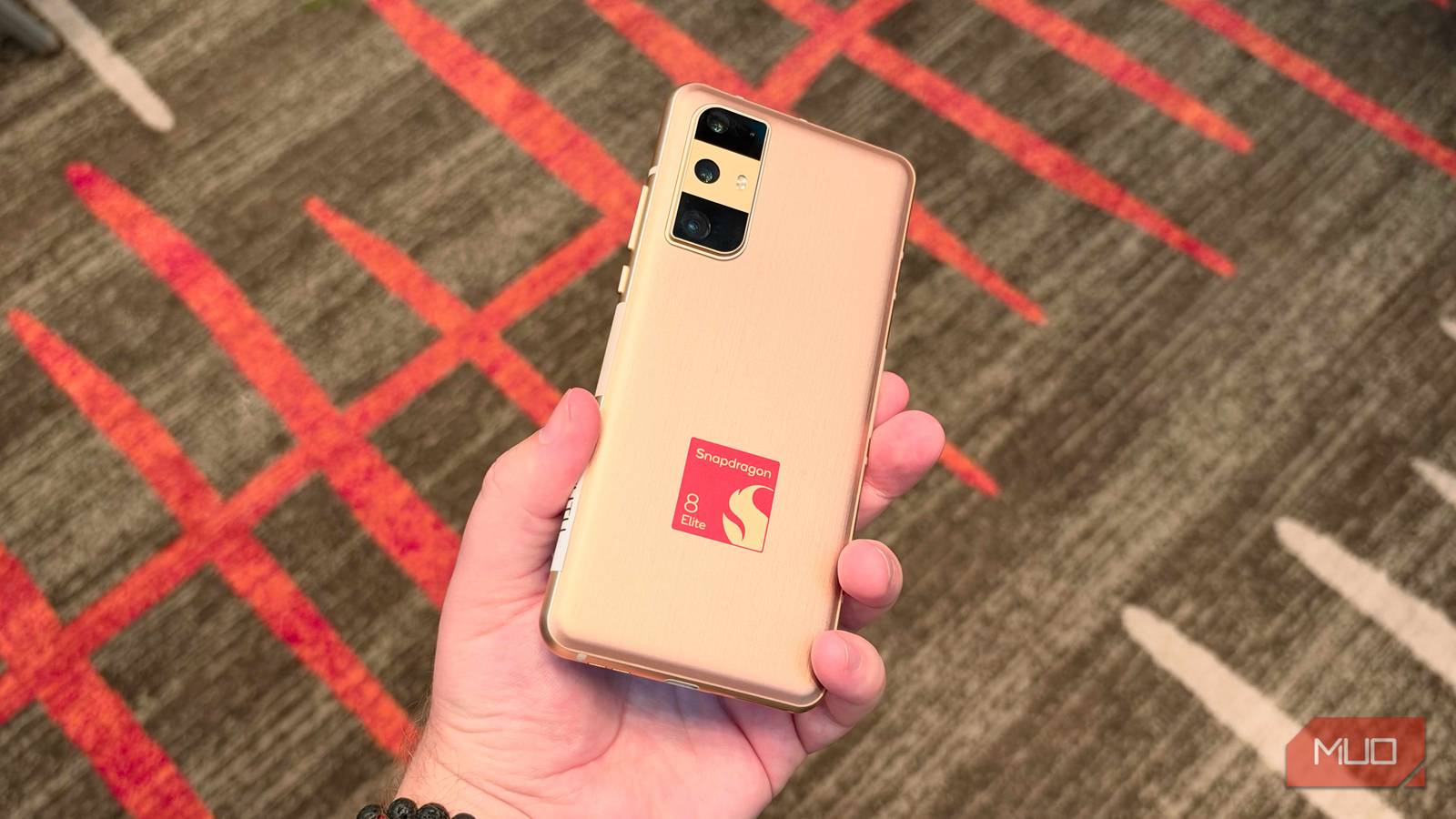
Qualcomm’s new flagship chip is here — well, chips. The company announced the Snapdragon 8 Elite Gen 6 at Snapdragon Summit, but it also threw a curveball by revealing a higher-tier Snapdragon 8 Elite Extreme Gen 6 mobile processor. Qualcomm says the Snapdragon 8 Elite Extreme Gen 6 isn’t simply a successor to the Snapdragon 8 Elite Gen 5 we saw last year, or the overclocked variant in Samsung and Redmagic phones. It’s something new entirely.
But how much different is the “Extreme” chip from the “Elite” ones we’re used to? And do we actually need more power in our phones, when current processors already deliver more performance than we know what to do with? I ran a suite of benchmarks including Geekbench, 3DMark, and AnTuTu on a Snapdragon 8 Elite Extreme Gen 6 reference device — and the latest Apple, Samsung, and Google phones — to find out.
About this article: Qualcomm provided travel and lodging for Snapdragon Summit. The company had no input in this article, and did not see it before publishing.
What’s new about Snapdragon 8 Elite Extreme Gen 6?
The reference device I tested uses a beastly 24GB RAM
The Snapdragon 8 Elite Extreme Gen 6 is built on TSMC’s 2nm process node, meaning it’s using the most advanced mobile chip manufacturing available. Apple’s recently launched A20 Pro chip also uses the same manufacturing process, and it’s available now in the iPhone 18 Pro and iPhone 18 Pro Max. The Snapdragon 8 Elite Extreme Gen 6’s prime core crucially hits 5GHz clock speeds for the first time, with the secondary performance cores clocked lower at 4GHz.
But the gap between the standard Snapdragon 8 Elite Gen 6 and the Extreme version might be relatively small. In CPU performance, Qualcomm says the Snapdragon 8 Elite Extreme Gen 6 is 13% faster with 35% better power efficiency compared to Snapdragon 8 Elite Gen 5. However, the standard Snapdragon 8 Elite Gen 6 is still 10% faster and still 37% more efficient. So, is that extra few percent worth picking the Extreme?
The real gains are set to arrive in the Snapdragon 8 Elite Extreme Gen 6 graphics and on-device AI performance. The new chip is said to provide a 44% speed boost in GPU performance, and a 35% faster NPU — again, that’s compared to Snapdragon 8 Elite Gen 5.
I put these claims to the test by benchmarking a Snapdragon 8 Elite Extreme Gen 6 reference device. This reference device uses the new chip, 24GB of RAM, 1TB of UFS 5.0 storage, a 4,400mAh battery, and a 6.73-inch AMOLED screen. It’s important to note that this is a reference device, not a commercial product, and the performance will vary compared to the actual devices that will ship with Snapdragon 8 Elite Extreme Gen 6.
However, these tests give us an early preview of the kind of performance we can expect from Honor, iQOO, Motorola, Nubia, OnePlus, Oppo, Redmi, Redmagic, Vivo, Xiaomi, and ZTE phones — with more likely to follow.
How the best Snapdragon chip stacks up
It’s better, but how much better? Let’s find out

Let’s look at those CPU speed claims first. I ran Geekbench 6 on the Snapdragon 8 Elite Extreme Gen 6 reference device and the Galaxy S26 Ultra, the latter of which uses an overclocked Snapdragon 8 Elite Gen 5. Single-core performance was nearly 20% better on the new chip, which is even faster than Qualcomm’s claimed 13%. Moving to multi-core tests, the Extreme chip was over 20% faster than the Galaxy S26 Ultra and its Snapdragon 8 Elite Gen 5 for Galaxy.
Next, I used the newer Geekbench 7 test on the Snapdragon 8 Elite Extreme Gen 6 reference device and the Galaxy Z Fold 8. Samsung’s smaller foldable uses the same chip as the Galaxy S26 Ultra, but with a different thermal profile. The gap is smaller, as the Extreme chip only outpaced last year’s Elite chip by 14% in single-core workloads.
|
Qualcomm Snapdragon 8 Elite Extreme Gen 6 reference device |
iPhone 18 Pro (Apple A20 Pro) |
Google Pixel 11 Pro Fold (Google Tensor G6) |
Samsung Galaxy Z Fold 8 (Snapdragon 8 Elite Gen 5 for Galaxy) |
Motorola Razr Fold (Snapdragon 8 Gen 5) |
Samsung Galaxy S26 Ultra (Snapdragon 8 Elite Gen 5 for Galaxy) |
|
|---|---|---|---|---|---|---|
|
Geekbench 7 (single / multi / GPU) |
3,442 / 11,736 / 26,107 |
3,979 / 10,765 / 62,351 |
1,967 / 4,289 / 3,249 |
2,996 / 9,967 / 14,775 |
1,103 / 5,717 / 13,430 |
— |
|
Geekbench 6 (single / multi / GPU) |
4,312 / 12,801 / 29,311 |
— |
2,655 / 5,963 / 7,657 |
3,564 / 10,173 / 19,938 |
2,612 / 8,809 / 17,513 |
3,606 / 10,614 / 23,144 |
I was really curious to know whether the Snapdragon 8 Elite Extreme Gen 6 reference device could beat the iPhone 18 Pro and its A20 Pro chip, and in Geekbench 7, it was a mixed bag. Apple’s new chip was 15% faster in single-core CPU performance, but Qualcomm’s Extreme chip was 9% faster in multi-core CPU performance. It wasn’t even close in the GPU test — Apple’s A20 Pro scored more than double that of the Extreme chip in Geekbench 7’s graphics benchmark.
This feels like a good time to point out just how far Qualcomm and Apple are ahead of Google. The Snapdragon 8 Elite Extreme Gen 6 reference device was 75% faster than the Tensor G6 in my testing, which is an incredible gap.
Qualcomm earned a decisive victory in AnTuTu — a comprehensive benchmark that tests CPU and GPU performance, memory and storage speed, and general user experience flows. The Snapdragon 8 Elite Extreme Gen 6 reference device scored over 5.5 million, whereas the iPhone 18 Pro came in at under 3.5 million.
|
Qualcomm Snapdragon 8 Elite Extreme Gen 6 reference device |
iPhone 18 Pro (Apple A20 Pro) |
|
|---|---|---|
|
AnTuTu |
5,522,833 |
3,479,396 |
In gaming performance, it’s clear Apple and Samsung are racing to the top. The Snapdragon 8 Elite Extreme Gen 6 reference device scored 15% higher in 3DMark’s Wild Life Extreme Unlimited test, which gauges a phone’s ability to render 4K UHD games. In 3DMark’s Solar Bay Extreme, a ray-traced gaming benchmark, the iPhone 18 Pro came out on top with an 8% better score.
|
Qualcomm Snapdragon 8 Elite Extreme Gen 6 reference device |
iPhone 18 Pro (Apple A20 Pro) |
Samsung Galaxy Z Fold 8 (Snapdragon 8 Elite Gen 5 for Galaxy) |
|
|---|---|---|---|
|
3DMark Wild Life Extreme Unlimited |
9,739 |
8,444 |
5,195 |
|
3DMark Solar Bay Extreme |
2,255 |
2,488 |
802 |
Really, these tests tell us that regardless of whether you choose an Elite Extreme phone or an A20 Pro phone, you’re going to get performance that you probably won’t know what to do with. But compared to the Tensor G6 chip in the Google Pixel 11 series, you’ll likely notice the downgrade in daily use — it’s that big of a downgrade.
What you’ll be able to do with Snapdragon 8 Elite Extreme Gen 6
And when you’ll be able to get it in a real, production device
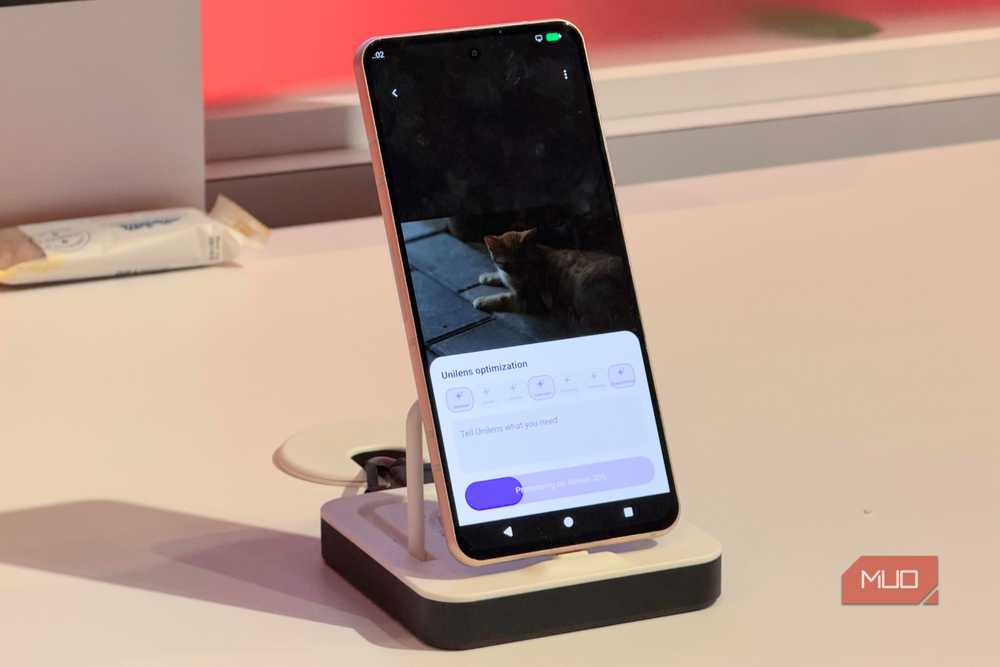
As we await the launch of Snapdragon 8 Elite Extreme Gen 6 phones you can actually buy, you’re probably wondering what new functionality the extra performance enables. And to be honest, I’m not sure. It’s clear that just about everything will be a bit faster thanks to Elite Extreme, but Snapdragon 8 Elite Gen 5 was already fast. So, I’m hoping this chip brings more on-device AI processing to flagship phones. It’s quicker and more secure than using the cloud, but it’ll be up to phone manufacturers and developers to actually offload that processing to your phone.
The Motorola Signature 27 may just be the first Snapdragon 8 Elite Extreme Gen 6 phone to launch in the U.S, but it doesn’t have an official release date yet.