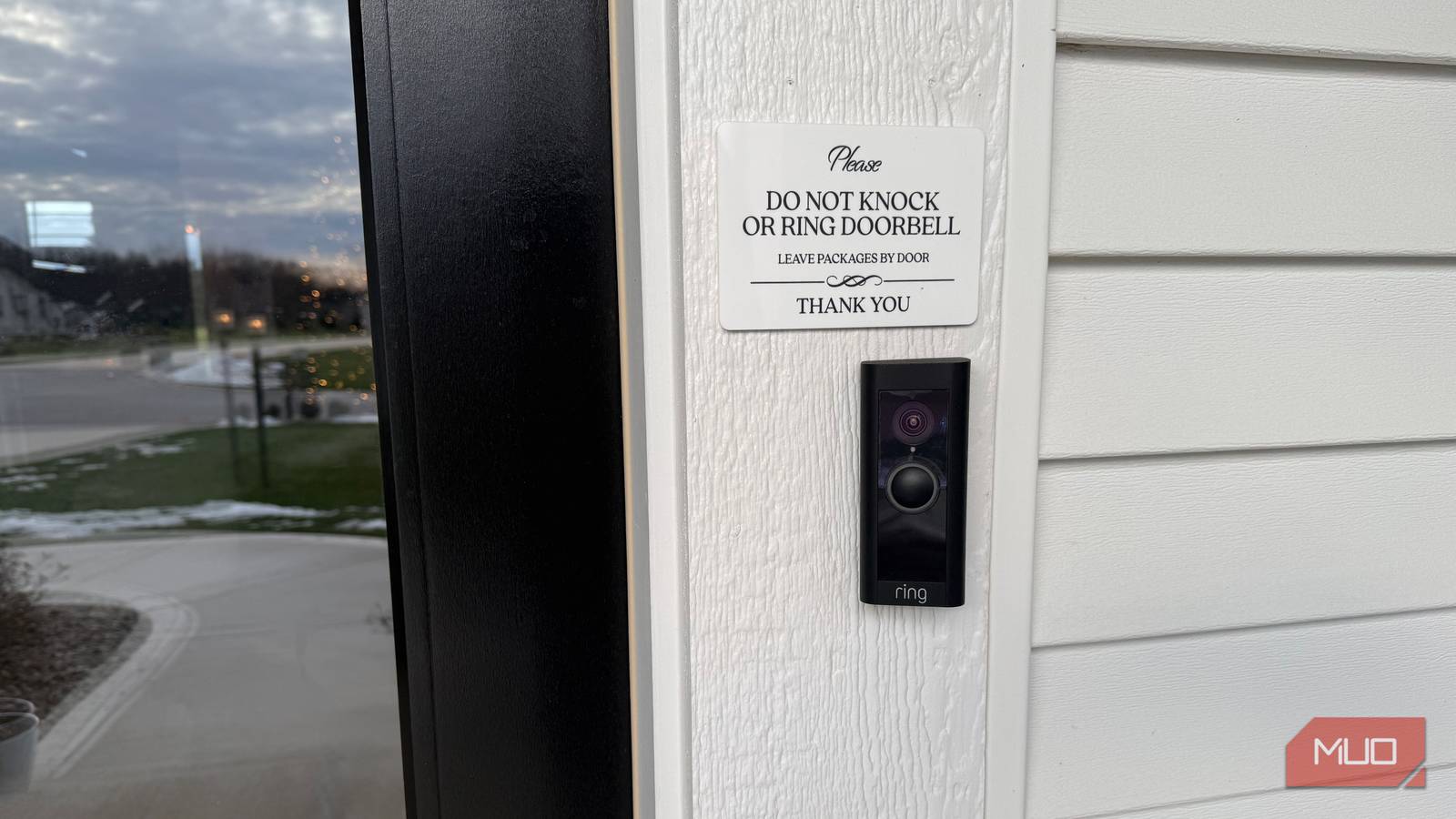
My house is a new build, and the builder installed a Ring Video Doorbell Pro 2 (now sold as the Ring Wired Doorbell Pro) before we got the keys. It’s one piece of a Ring setup I’ve slowly built into the whole house, so I expected it to just work. For a few months, it did. Then the indoor chime started buzzing on its own, and every so often it fired off a full ring with nobody at the door — sometimes in the middle of the night. I work from home, so I heard all of it. Two electricians came out and left stumped. The real fix was a small part that runs about $8 and took five minutes to install.
When my doorbell started ringing at no one
Fine for months, then buzzing at night
The buzzing showed up first. A low electrical hum from the chime box in the hallway, faint enough that I blamed the HVAC. Then came the half-rings, the solenoid twitching just hard enough to tap the chime bar without a full strike. Within a week or two, it escalated to complete phantom rings — the same two-tone sound a real visitor makes, except the app showed no motion and no button press. The timing was random. Some days nothing, other days four or five rings, including well past midnight. I noticed a rough pattern with the weather, too. Windy nights and sharp temperature swings seemed to trigger it more, though I could never prove that part. With my office 12 feet from that chime, tuning it out stopped being an option.
Two electricians, zero answers
Line voltage isn’t low voltage

The builder sent an electrician out under warranty. He checked the button, tightened the wiring at the chime, and found nothing wrong. Two nights later it phantom-rang again. A second electrician poked around the transformer and said the line that turned out to be the whole story: “I don’t normally deal with low-voltage stuff.” That’s no knock on him. House electricians live in the 120-volt world of outlets, breakers, and lighting. A doorbell runs on a separate low-voltage loop, where a transformer drops your home’s power down to roughly 16 volts and feeds the button and chime. Video doorbells muddy this, because they pull a small constant draw to stay online even when nobody touches the button. Neither electrician was set up to think about that steady load, so both chased it as a wiring fault.
The part my builder probably threw out
What Ring’s Pro Power Kit actually does

Once I started reading, the culprit got obvious. The Pro 2 needs a small module called the Pro Power Kit, and mine didn’t have one. It’s a sealed little unit that wires into your existing chime and manages how power reaches the solenoid. The doorbell’s always-on draw keeps trying to energize that coil. Without the kit smoothing it out, the solenoid sits half-powered — enough to hum around the clock and, when conditions nudge it over the line, enough to snap the striker and fake a ring. The kit makes sure the chime gets a clean pulse only when someone presses the button. Here’s the maddening part: the Pro 2 ships with one in the box. My builder mounted the doorbell, almost certainly didn’t recognize the small package, and threw it out with the wrapping. The fix had been in a landfill for months.
Installing the Pro Power Kit at the chime
A five-minute job at the chime box
A replacement kit cost about $8. Installing it was quick, though I cut power at the breaker first, because even low-voltage work isn’t worth a surprise. I pulled the cover off the indoor chime, found the terminals marked front and trans, and connected the kit’s two leads to those screws the way Ring’s instructions show. Cover on, breaker on, done. The change landed instantly. That hum I’d trained myself to ignore was gone, and I noticed the quiet right away. No half-rings that night. No phantom 2 a.m. wake-ups since. The doorbell rings when someone’s actually there and stays silent otherwise, which is all I ever asked of it. With the hardware finally dependable, I could trust it as an automation trigger — its motion detection now runs a lighting routine when we’re away.
The cheapest smart-home fix I’ve made
Two licensed electricians looked at this and came up empty, and the answer was an $8 part my builder had tossed in the trash. If you inherited a video doorbell with a new house and the chime hums or rings for no reason, don’t assume the doorbell is dying. Check whether the Pro Power Kit ever made it onto your chime. Mine went unfixed for months because everyone kept staring at the wiring instead of the missing piece. Once it was in, the problem was gone for good — which freed me up to build the Ring routines and every day smart-home fixes I actually wanted.