
The weakest link in a modern smartphone is the battery. It’s the one component that degrades faster than anything else. So yes, it’s no surprise that manufacturers like Google, Samsung, and Apple have all started offering features like an 80% charge limit to help slow that process down.
But out of all three, Google is the only one that throttles Pixel batteries after 200 charge cycles, and on newer models, you can’t turn it off. And that forced behavior is what makes it controversial.
Pixel Battery Health Assistance means well
Your Pixel is playing a long game

Your Pixel comes with a lithium-ion battery, and it degrades a little every time you charge it. Because of this, after hundreds of cycles, the battery can’t hold the charge like it used to. That’s just how every lithium-ion battery ages, so phone makers have to rely on software tricks to slow this down.
One common trick is charging optimization, which basically delays the final stretch of charging, so your phone reaches 100% right before you normally unplug. This is obviously great for overnight charging as it keeps your phone from staying at 100% for long. The other one is to limit the phone’s charging to 80%, which is good for long-term battery health.
But beyond these two, Pixels have another feature called Battery Health Assistance. This one only kicks in once your phone has 200 charge cycles. A full charge from 0% to 100% counts as 1 full cycle, so if you discharge from 100% to 20% and then charge it back to 100%, that counts as a 0.8 cycle.
Once your Pixel crosses 200 charge cycles, the feature gradually caps the battery’s maximum voltage. A lower voltage means less strain on the cell, which slows down the aging process. Your Pixel keeps ramping this cap up as the number of charge cycles increases. More importantly, since charging speeds are tied to how much voltage the battery can take, you’ll also notice a dip in charging speeds. So yes, it’s a double whammy.
The problem with making it mandatory
Not everyone’s in it for the long haul
The Battery Health Assistance is available on Pixel 6a and later models, but the big catch is that it doesn’t work the same on all models. On devices between the Pixel 6a and Pixel 9 Pro Fold, this feature is optional. That means if you don’t want your Pixel to throttle battery performance, you can easily opt out by heading to Settings > Battery > Battery Health > Battery Health Assistance and turning off the toggle.
If you have a Pixel 9a or a model released after that, though, you don’t get a choice. Google doesn’t offer a toggle to opt out of Battery Health Assistance, so you’re stuck with it, whether you want it or not.
On one hand, this makes sense. Google now promises seven years of software updates on its phone, so if the battery gives up too soon, then it’s a problem. If you’re planning to keep your Pixel for four years or more, this feature is genuinely doing you a favor. More importantly, it doesn’t affect performance in any way, so it’s not like your Pixel will run slower because of this.
My only problem with this is Google treating it as a one-size-fits-all solution. Battery Health Assistance is pretty much useless for anyone on a two-year upgrade cycle because it’s solving a problem they’ll never run into. They just end up using a phone that charges slower and caps out at a lower capacity than it’s actually capable of.
Even if you plan to keep the phone for longer, a battery replacement might make more sense. Third-party repair shops will swap a Pixel battery for $40 to $60 in most cities, while going through official channels usually runs somewhere around $100. The point is, if you’re planning to replace the battery after two to three years, Google’s forced battery throttling can feel like an unnecessary annoyance.
Apple and Samsung don’t force this onto users
Google’s the odd one out here
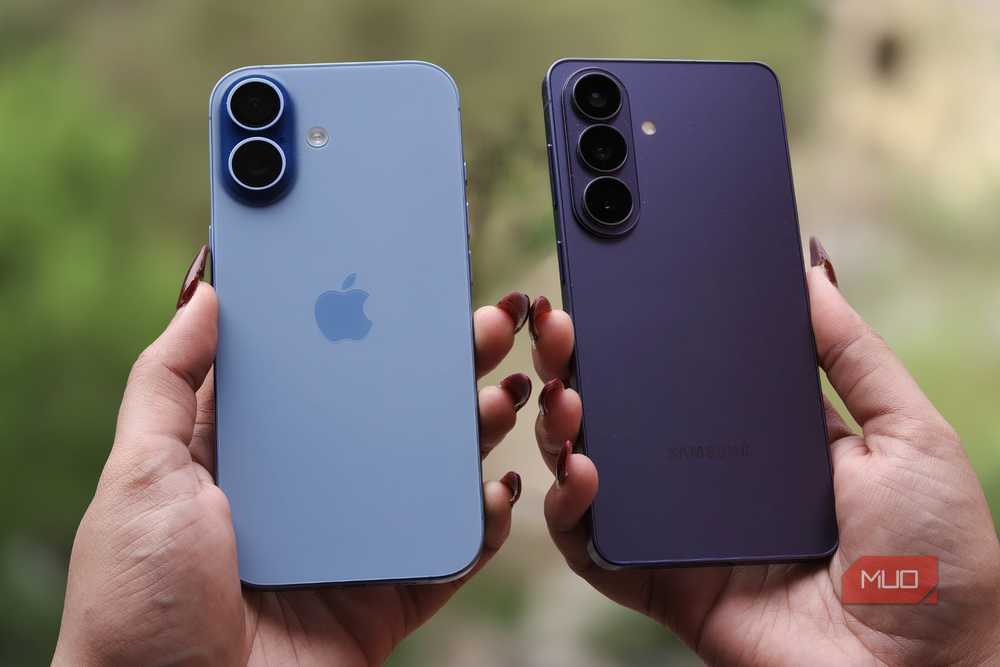
Pixels aren’t the only phones dealing with battery degradation, of course. iPhones and Galaxy phones face the exact same issue over time. The difference is that neither Apple nor Samsung forces battery throttling.
Apple had its own version of throttling back in iOS 11. They were caught deliberately slowing down iPhones with aging batteries to prevent performance issues. But after the backlash, Apple added an option to disable the performance management feature.
Samsung’s approach has always been simple. It offers a battery protection feature that caps charging at 80%, but it’s optional. There’s no throttling happening in the background once you cross a certain number of charge cycles. To be fair, Galaxy phones don’t need the safety net as much to begin with. Samsung’s latest phones are rated to hold onto 80% battery health after 2,000 charge cycles. Compared to this, both Pixels and iPhones are only rated for 1,000 cycles before hitting that same 80% mark.